Challenges of Running An Independent NE Ski Area

berkshireskier

Active member
53 degrees (F) here this morning in southern New England with heavy rain and very high winds. Yesterday, it looked the frozen arctic around here with completely snow-covered ground and now this morning, we have green grass in our back yard and much of the snow has melted away overnight. UGH. Rain throughout all of New England and well up into Quebec too. This is why you NEVER want to own a ski area in southern New England (or even northern New England). It is supposed to turn colder later today and cold over the weekend, so snow making can resume for the Xmas week holiday.
 
This is why you NEVER want to own a ski area in southern New England (or even northern New England).
I'm sure many of them have been profitable in the long run. The question is how much worse might it get and if so at what rate. My conclusion as researched here is that the Northeast has always had a rain problem but that it is getting worse very gradually. There is no question that the rain issue is worse in southern New England, Catskills and the mid-Atlantic than in northern New England and upstate NY.
 
I'm sure many of them have been profitable in the long run. The question is how much worse might it get and if so at what rate. My conclusion as researched here is that the Northeast has always had a rain problem but that it is getting worse very gradually. There is no question that the rain issue is worse in southern New England, Catskills and the mid-Atlantic than in northern New England and upstate NY.
I have been skiing since 76
Rain has always been a issue
 
I'm sure many of them have been profitable in the long run. The question is how much worse might it get and if so at what rate. My conclusion as researched here is that the Northeast has always had a rain problem but that it is getting worse very gradually. There is no question that the rain issue is worse in southern New England, Catskills and the mid-Atlantic than in northern New England and upstate NY.
I have always wondered about the financials for some of the smaller, individually-owned ski areas, especially in southern New England and lower NY state. I realize they do take in a fair amount of money pre-season from season ticket sales, race programs sales, etc. I did once ask an acquaintance of mine who was the marketing director at a local ski area how many season tickets they sold each year and, needless to say, he told me that was a trade secret and couldn't be revealed.

Obviously, they take in a lot of money from daily ticket sales, lessons, cafeteria food, ski shop sales, etc. but it is a short season here in NE and I've been told that they make about 50% of their money over Xmas vacation, MLK weekend and the Presidents' Week vacation period, so if the weather wipes out or affects those time periods, it's a big loss of revenue that can't be made up later in the season. And they also have huge electric bills for snowmaking and they need to employ a substantial number of seasonal and full-time employees, plus various capital expenses - new chairlifts or snowmaking equipment or lodge upgrades or renovations. Plus insurance costs and other expenses. I have to believe it can sometimes be tough to make large amounts of money for the owners.
 
I have always wondered about the financials for some of the smaller, individually-owned ski areas, especially in southern New England and lower NY state. I realize they do take in a fair amount of money pre-season from season ticket sales, race programs sales, etc. I did once ask an acquaintance of mine who was the marketing director at a local ski area how many season tickets they sold each year and, needless to say, he told me that was a trade secret and couldn't be revealed.

Obviously, they take in a lot of money from daily ticket sales, lessons, cafeteria food, ski shop sales, etc. but it is a short season here in NE and I've been told that they make about 50% of their money over Xmas vacation, MLK weekend and the Presidents' Week vacation period, so if the weather wipes out or affects those time periods, it's a big loss of revenue that can't be made up later in the season. And they also have huge electric bills for snowmaking and they need to employ a substantial number of seasonal and full-time employees, plus various capital expenses - new chairlifts or snowmaking equipment or lodge upgrades or renovations. Plus insurance costs and other expenses. I have to believe it can sometimes be tough to make large amounts of money for the owners.
You have nicely summarized why we are seeing the consolidation that has been happening over the last 10 years. Vail, Alterra, Boyne, Powder, all have diversified geographically to reduce annual risk. As highlighted this year, its rare for all geographic regions to have a bad year.
 
I have always wondered about the financials for some of the smaller, individually-owned ski areas, especially in southern New England and lower NY state.
You should follow Stuart. He is fascinated with mom-and-pop ski areas, and why some are more successful than others. A lot of that comes from his formative ski years in Michigan.
 
You should follow Stuart. He is fascinated with mom-and-pop ski areas, and why some are more successful than others. A lot of that comes from his formative ski years in Michigan.
Mount St Louis is a small 550' vertical family run area near me. https://mountstlouis.com/pdf/MSLM-Trail-Guide.pdf. I believe they have been owned by the same family since opening in the 60's. I am am always impressed how they manage to invest so heavily back into the mountain. They have a state of the art very high density Techno Alpine fan guns running along all of the trails and have many modern detachable 6+ seat chairs including this very high tech 8 person Doppelmayr D line lift with heated seats. https://liftblog.com/adventure8-mt-st-louis-moonstone-on/. I suspect they invest every single penny they earn back into the mountain and the infrastructure.
 
many modern detachable 6+ seat chairs including this very high tech 8 person Doppelmayr D line lift with heated seats.
I'm always fascinated by indie ski areas with modest vertical drops using expensive detachable lifts. What's the thinking behind that? How much uphill time could it possibly save vs. a fixed grip?

My personal favorite was this one at Söllereck, Austria (however, that wasn't a Mom and Pop joint).
Unfathomable in the U.S. -- a six-seat heated chair with a bubble covering less than 600 vertical feet!
20220311_140539.jpg
 
I have always wondered about the financials for some of the smaller, individually-owned ski areas, especially in southern New England and lower NY state. I realize they do take in a fair amount of money pre-season from season ticket sales, race programs sales, etc. I did once ask an acquaintance of mine who was the marketing director at a local ski area how many season tickets they sold each year and, needless to say, he told me that was a trade secret and couldn't be revealed.
When considering a specific ski area/resort, take a look if there are revenue-generating activities and events during the "green seasons."

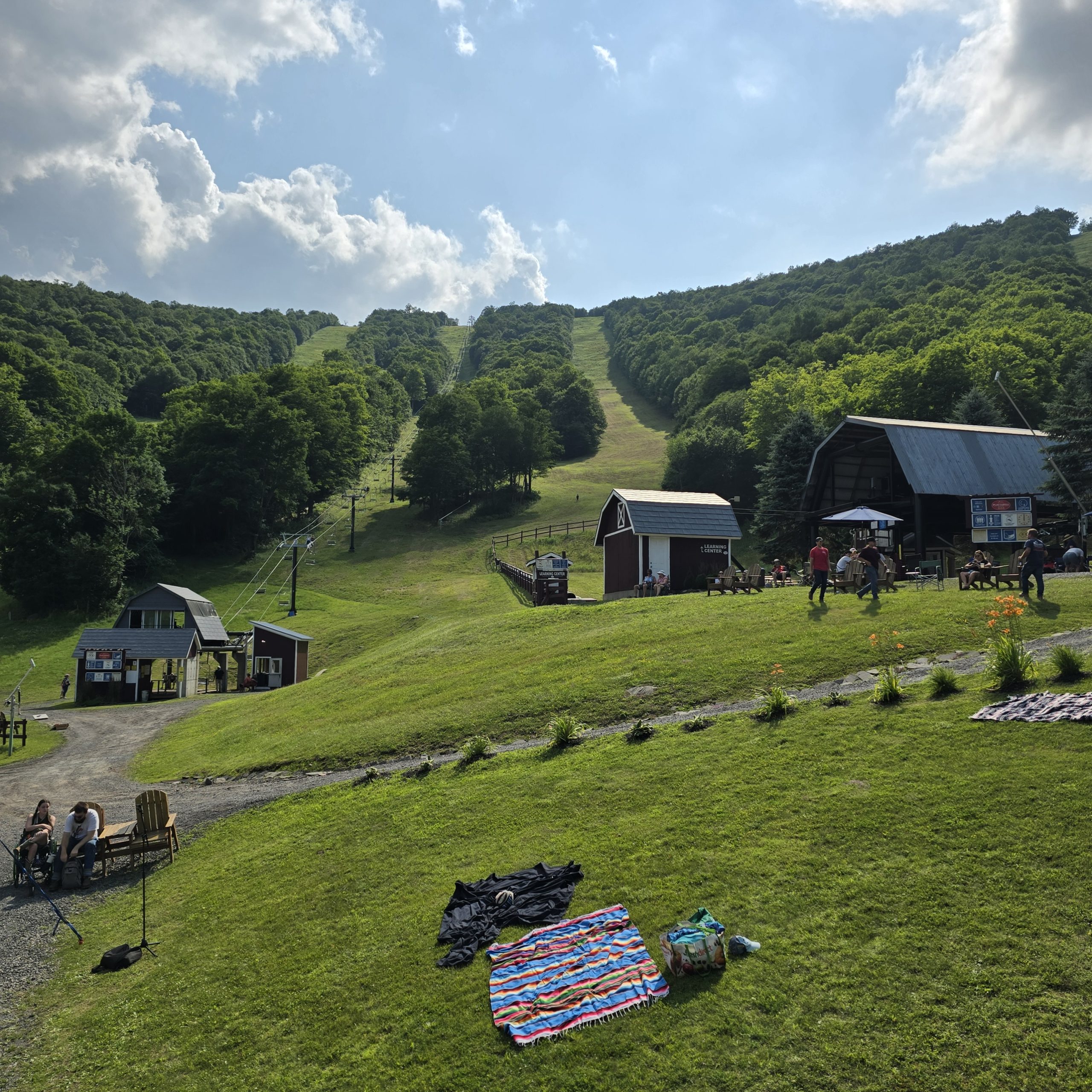
For example, Plattekill found that doing weddings and other private group events made more sense than mountain biking. They are essentially fully booked these days. Much less ongoing maintenance and staffing required.
 
Plattekill found that doing weddings and other private group events made more sense than mountain biking.
Yes, Harv has mentioned that renting the mountain out Monday through Thursday for groups during ski season has been successful. I never bothered to look at their summer page:


Apparently, they stopped MTB around five years ago. It was one of the first lift-served destinations in the northeast and became very well known/hosted major downhill races, etc. @jasoncapecod, I assume that you rode there at some point?
 
I'm always fascinated by indie ski areas with modest vertical drops using expensive detachable lifts. What's the thinking behind that? How much uphill time could it possibly save vs. a fixed grip?
The runs are so short. Therefore the majority of the skiers are not actually skiing at any given time. The hourly lift capacity is more important in determining the ski area carrying capacity. On a 2000+ vertical run, people are more willing to wait for a 10-15 min lift line. This isnt going to happen on a 500’ run.
 
Yes, Harv has mentioned that renting the mountain out Monday through Thursday for groups during ski season has been successful.

Mountain rentals (at Plattekill) are not weather dependent. Many of the groups rebook for the following year, the day of the event.

The price seems to have gone up $1000 every year for the last five years, at least. And the bar bills for many groups are 4x the rental cost.

All of this holds true for both ski and wedding rentals.

Without getting into the details which are private, I can say that Plattekill is a successful business.

Laz has created a strong brand, by in part by preserving the quality of the experience and his steadfast refusal to discount tickets.
 
Yes, Harv has mentioned that renting the mountain out Monday through Thursday for groups during ski season has been successful. I never bothered to look at their summer page:


Apparently, they stopped MTB around five years ago. It was one of the first lift-served destinations in the northeast and became very well known/hosted major downhill races, etc. @jasoncapecod, I assume that you rode there at some point?
I think he dropped Mtb more then 5 yrs ago
Back then, his downhill mountain biking was above my pay grade. Mostly big drops very gnarly runs today’s mountain bike parks are mostly flow trails and jump trails
 
Bretton Woods built mid-mountain lodge that was clearly more for green season events than for the ski season. Starting with the planning, probably took 4-5 years to complete the project. Also built a gondola from the base to access the Rosebrook Lodge.
 
downhill mountain biking was above my pay grade.
Yes. On July 4, 1993 Mammoth had 5 feet of snow on its frontside while the backside was mostly melted out. So they offered skiing and mountain biking from the top on the same day, and then 8-year-old Adam wanted to do both. This was probably the first time either of us had been on a mountain bike. I immediately learned that's what intermediate on skis is most definitely not on a mountain bike. Mammoth hosts a bike race off the back, curling around to Main Lodge with winning times around 5 minutes. It took me an hour an a half.

Twice more in July I have done the mountain biking after skiing, but on the easy trail from Main Lodge down to the village. But even on that trail with Liz in 2017 I managed a fall and some road rash.
 
Yes. On July 4, 1993 Mammoth had 5 feet of snow on its frontside while the backside was mostly melted out. So they offered skiing and mountain biking from the top on the same day, and then 8-year-old Adam wanted to do both. This was probably the first time either of us had been on a mountain bike. I immediately learned that's what intermediate on skis is most definitely not on a mountain bike. Mammoth hosts a bike race off the back, curling around to Main Lodge with winning times around 5 minutes. It took me an hour an a half.

Twice more in July I have done the mountain biking after skiing, but on the easy trail from Main Lodge down to the village. But even on that trail with Liz in 2017 I managed a fall and some road rash.
Not to turn this into a mountain bike thread, but today’s modern mountain bikes make a big difference
 
I would say that for the broad public, mellower eastern mountains are surely more user friendly for mountain biking than Mammoth is. And from summer pics I see the landing surface if you fall looks more forgiving.
 
Back
Top