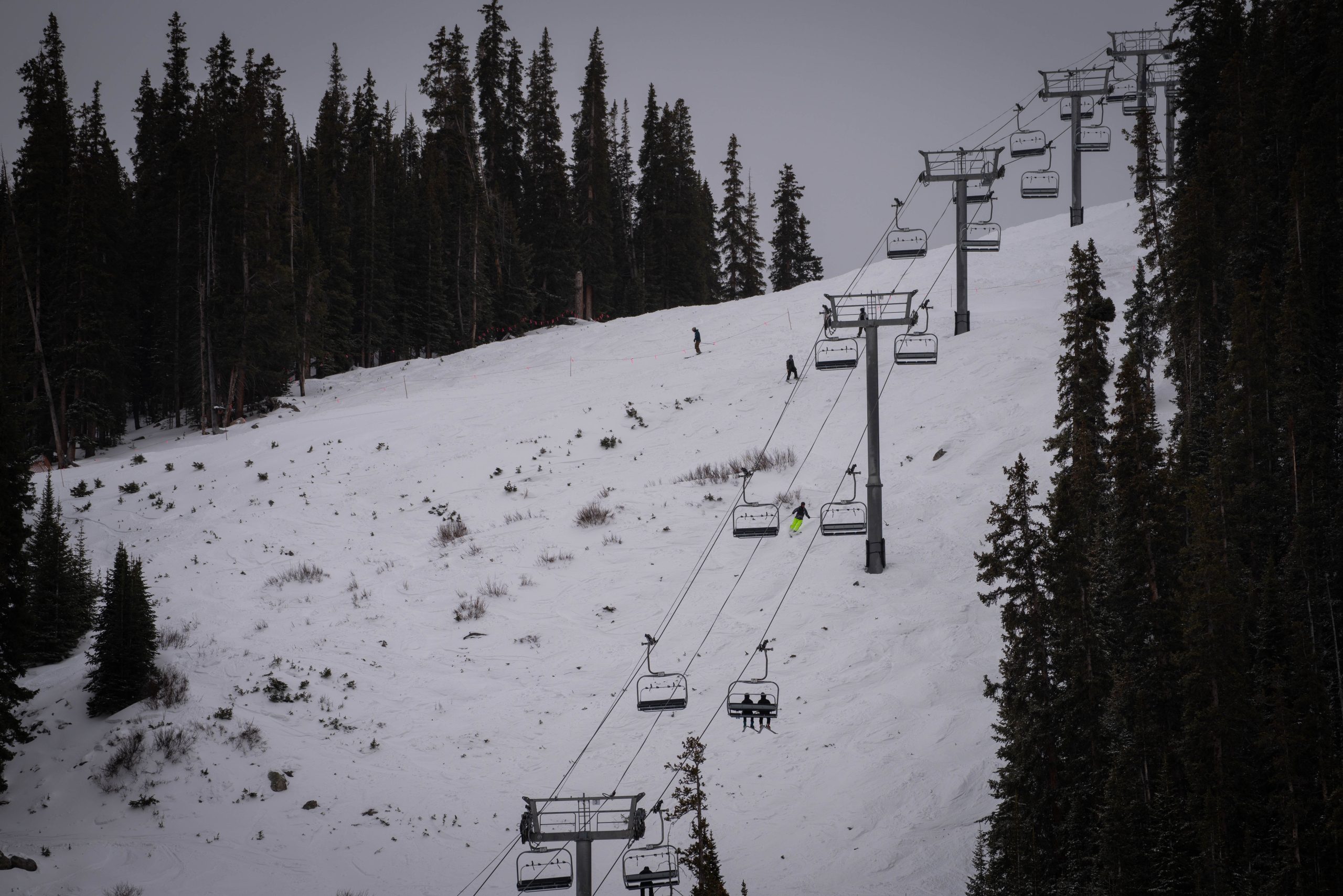
Colorado Skier Days 2025-26: Collapse 24%, Lowest Since 1991-92

ChrisC

Well-known member
Impressively Poor Season Visitation-Wise for Colorado.

It would be really interesting to see which type of skier visits collapsed: Out-of-state vacationers (Fly vs. Drive), Denver Metro/Front Range, Close-Range, Locals (< 10 miles), Day Tickets, or Employee Pass?

I assume vacationing skiers had to commit. However, I am sure the closer you lived to a ski area, the less you skied. Many locals and some Denverites stayed home.
(What resorts experienced the lowest declines: Steamboat? Aspen? Remote destinations? (exception: Telluride).

IMHO, I always thought more recent crowding, especially on powder days, is primarily due to the growth of ski towns, mountain communities, down-valley semi-suburbs, and some metro skiers. Just look at the growth of Vail-to-Eagle, Aspen-to-Glenwood Springs, Jackson-to-Driggs, Heber City-Park City-Kimball Junction, Summit County, Metro Area/Sprawl, Telluride-Placerville-Montrose. And these are the residents most likely to show up on a powder day.
 
I am sure the closer you lived to a ski area, the less you skied.
I still don't get why ski days are the all important statistic that is being discussed unless "the more ski days, the more on-mountain revenues." Given the prevalence of the three mega passes, shouldn't we be looking at something else?
 
I still don't get why ski days are the all important statistic that is being discussed unless "the more ski days, the more on-mountain revenues." Given the prevalence of the three mega passes, shouldn't we be looking at something else?
An interesting thought, but I think it still primarily comes back to skier days.

Why?

  • Crowding, one of today favorite topics in skiing is directly related
  • All but lift ticket revenue is very directly correlated (meals, lessons, lodging, etc...)
  • Even lift revenue is somewhat correlated, just less so than in the past
In Colorado road and parking lot crowding is also highly correlated to skier days.

So I'd say that it's still a very meaningful and fairly easy method to measure much of the impact and health of the industry.

I'm waiting for oh so many ski projects to be delayed or simply never announced for a year or two from the horrific season Colorado just had. won't be 100%, but I'd bet many projects are now delayed.
 
unless "the more ski days, the more on-mountain revenues." Given the prevalence of the three mega passes, shouldn't we be looking at something else?


Skier Days are the best, most reliable metric for overall ski company health.

Yes, the more skier days, the more on-mountain revenue. The fewer skier days, the less on-mountain.

Sure, the new buy-now, ski-later season pass model allows ski areas to capture revenue upfront and shifts the day-pass skier ratio. It worked PERFECTLY for Vail this year! Bravo. Lift revenue barely declined; it was insulated. However, other types of revenue driven by skier days suffered much larger declines, similar to the overall skier days decline:


Vail Resorts - Q2 1/31/2026 Results

1780674071594.png


Lift revenues were somewhat stable, but everything else declined more measurably

1780674131054.png


2026 Q3 - comes out in days, but preliminary numbers from March are similar

1780674302332.png
 
Last edited:
Impressively Poor Season Visitation-Wise for Colorado.


It would be really interesting to see which type of skier visits collapsed: Out-of-state vacationers (Fly vs. Drive), Denver Metro/Front Range, Close-Range, Locals (< 10 miles), Day Tickets, or Employee Pass?

I assume vacationing skiers had to commit. However, I am sure the closer you lived to a ski area, the less you skied. Many locals and some Denverites stayed home.
(What resorts experienced the lowest declines: Steamboat? Aspen? Remote destinations? (exception: Telluride).

IMHO, I always thought more recent crowding, especially on powder days, is primarily due to the growth of ski towns, mountain communities, down-valley semi-suburbs, and some metro skiers. Just look at the growth of Vail-to-Eagle, Aspen-to-Glenwood Springs, Jackson-to-Driggs, Heber City-Park City-Kimball Junction, Summit County, Metro Area/Sprawl, Telluride-Placerville-Montrose. And these are the residents most likely to show up on a powder day.
Do any vacation skiers pre commit to a particular ski hill outside of Christmas time anymore?
 
Last edited:
I am sure Independent resorts without a relationship to a Mega-pass product suffered worse than Vail, especially those in Oregon, Washington, Colorado, Utah, and New Mexico. Their ski days and lift revenues are even more dependent on day skiers who have not previously bought a ticket.

Also, the Indy Pass likely does not help many independent resorts in a season like this, since one can only utilize it two days per ski area. If the redemption does not occur, the resort does not get paid.

Possibly, this was a banner year for the Indy Pass owner due to the lack of redemptions in the Northwest and on the West Coast. Perhaps it was offset by higher-than-expected redemption rates in the Northeast, but who knows. The less an Indy passholder skis, the better Indy Pass does financially. It's somewhat the opposite of the Vail model, since skier days drive other revenue streams. Indy Pass wants to minimize redemptions and skier days. I assume that is why they take sales offline at times: to model redemption rates. And perhaps create some bogus "Internet Scarcity" and social media coverage. However, with AI, they should be able to model expected redemption rates for each pass purchase in near real time, and how many skier days that might translate to across their partner resorts.
 
Does any vacation skiers pre commit to a particular ski hill outside of Christmas time anymore?
The vast majority of destination skiers do. We are highly unrepresentative here. But recall that in one of the travel plan threads EMSC said 95% of his ski days including location are determined by October. An even in my case Iron Blosam Week is fixed before the season starts and usually cat skiing in Canada too.

Correlation of skier visits to snowfall by NSAA region:
Northeast 57%
Pacific Northwest 62%
Pacific Southwest 66%
Rockies 13%
The above makes it seem obvious that most air travel skiers stay fixed, while the regions with higher proportion of drive-up business are more sensitive to snowfall.

Another way to look at it is how big the hit in skier visits is in a worst case scenario to a normal year for the region vs. 24% cited for Colorado.
Rockies 2025-26: 25%
Northeast 2015-16: 26% (they are more willing to ski in masochistic conditions :icon-lol: )
Pacific Southwest 2014-15: 36%
Pacific Northwest 2014-15: 49% (PNW hit in 2004-05 was 56%)

I agree 100% with EMSC that skier days are and will remain a key statistic. Obviously Vail and Alterra think so as they refuse to make them public at the individual resort level.
 
Do any vacation skiers pre commit to a particular ski hill outside of Christmas time anymore?

In North America, I think skiers have to commit before the ski season and buy one of the Pass Products: Epic, Ikon, or Indy. So they are committing to a menu of ski areas and have already mentally mapped some trips.

I have some Bay Area friends buying Epic 4-Day passes now. In effect, they are committing to ski Heavenly, Kirkwood, and Northstar. Knowing their tastes, it's likely 2 weekends in South Lake Tahoe.

Also, Ski House Culture on the West Coast (and East Coast) causes some skiers to buy a share, and likely commit to a particular ski hill/region:
  • CA (North Tahoe, South Tahoe, Mammoth)
  • WA (Whistler-Blackcomb)
  • CO (some Denver friends have done Vail/Beaver Creek shares)
  • VT (Killington, Mt. Snow, Okemo, Stowe, etc)
  • ME (Sunday River)
People sometimes graduate to homeownership, Airbnb/VRBO investments, etc., at a certain ski resort. They commit.


If one wants to heli- or cat-ski in North America next season, one is likely already committed to a particular operation/hill if not months ago.
 
Back
Top