
ChrisC
Well-known member
After a previous guided day in Val d'Isere (February 5, 2026) - only "opening/availability/spot" for a group ski day - I backtracked up the Tarentaise Valley to La Clusaz in the Alps Foothills, on my way to La Grave.
(FYI, I have used 4 different guiding outfits in Val d'Isere; this time it was Alpine Experience, whom I recommend, link here. They are relatively small, but have a few groups on the hill to compare notes/conditions in real time.)
La Clusaz
La Clusaz is located in the Aravis Range (Chaîne des Aravis), a subrange of the French Pre-Alps in the Haute-Savoie. It's the home of freeride legend Candid Thovex (YouTube ski GOAT/OG) and has cultivated a true community of locals who can live there year-round and ski every line. Outside of Chamonix/Verbier, La Clusaz definitely has the strongest freeride scene near Geneva (one can gauge the number of fat skis in lift queues, especially France-made Black Crows), and the terrain to support it.
Snow & Terrain
Because the Aravis is the first major mountain range on the western side of the Alps, it captures significant snowfall from incoming weather fronts from the north to the west. It resembles the Pacific Northwest: heavy snow at altitude, with a resort base elevation barely above the standard/safe freezing level of 1000m. I felt at home. Overall, I assume the higher altitudes have among the highest annual snow totals in the Alps (e.g., Avoriaz, with its high resort-level snowfall compared to other French resorts).
The freeriding at La Clusaz is easily accessible, and hikes are mostly unnecessary or under 20 minutes. And although most skiers think of Le Balme when they think of La Clusaz, there is much more for experts/freeriders! Supposedly, it can take a few hours for Le Balme to open after a dump. However, there is a lot of great, underrated terrain around L'Etale and even in the Beauregard area. And some more or less obvious, hidden zones and trees around L'Aiguille. However, 'Powder Panic' does exist at La Clusaz, and there is competition (from locals living around La Clusaz and the larger cities of Annecy and Geneva), but mostly on weekends. Luckily, I was skiing on a weekday with new snow. (Note: The vibe and potential crowding are the antithesis of Ste. Foy, with its mostly resort-oriented clientele, low competition, powder that can last for days, higher altitude/better snow quality, and sidecountry that requires more effort to access.)
To quote Powder Hounds from their La Clusaz day here
Layout
The local ski area of La Clusaz is spread across five interconnected mountains within this region (from left to right on the trail map below):
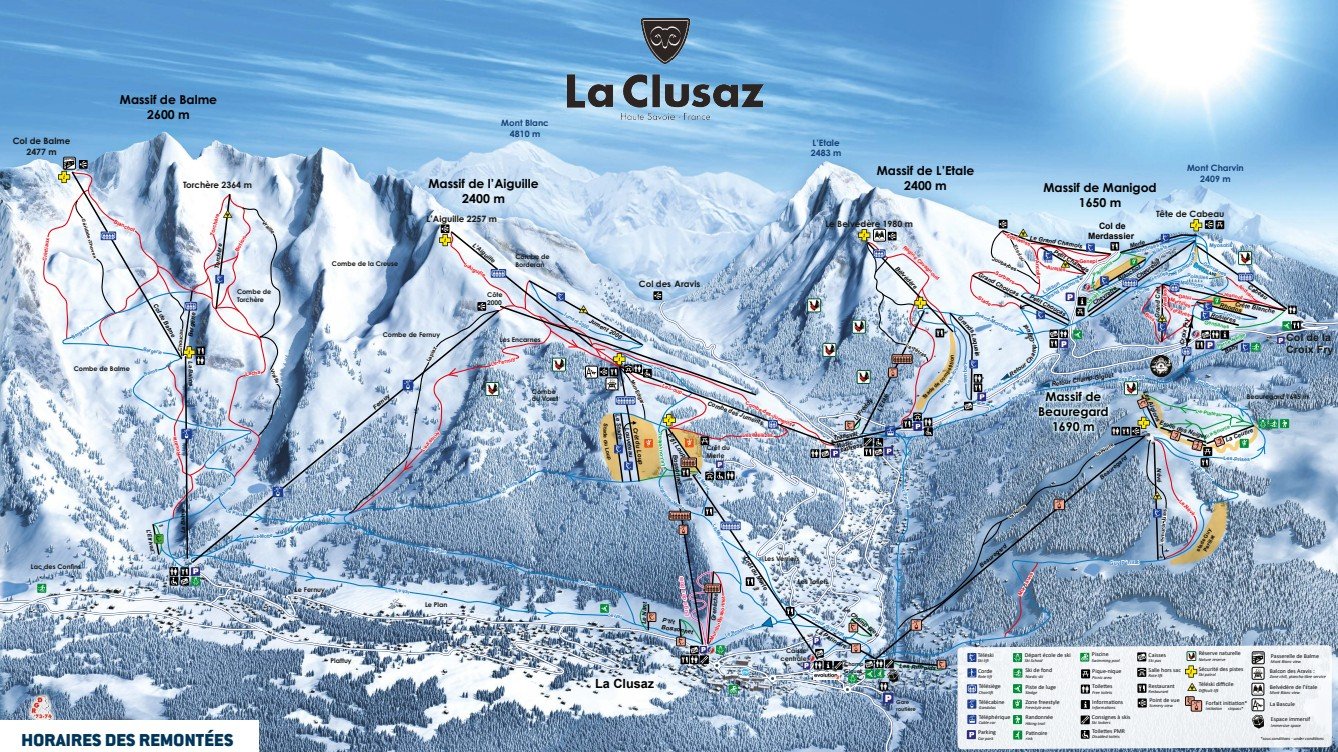
OpenSkiMaps
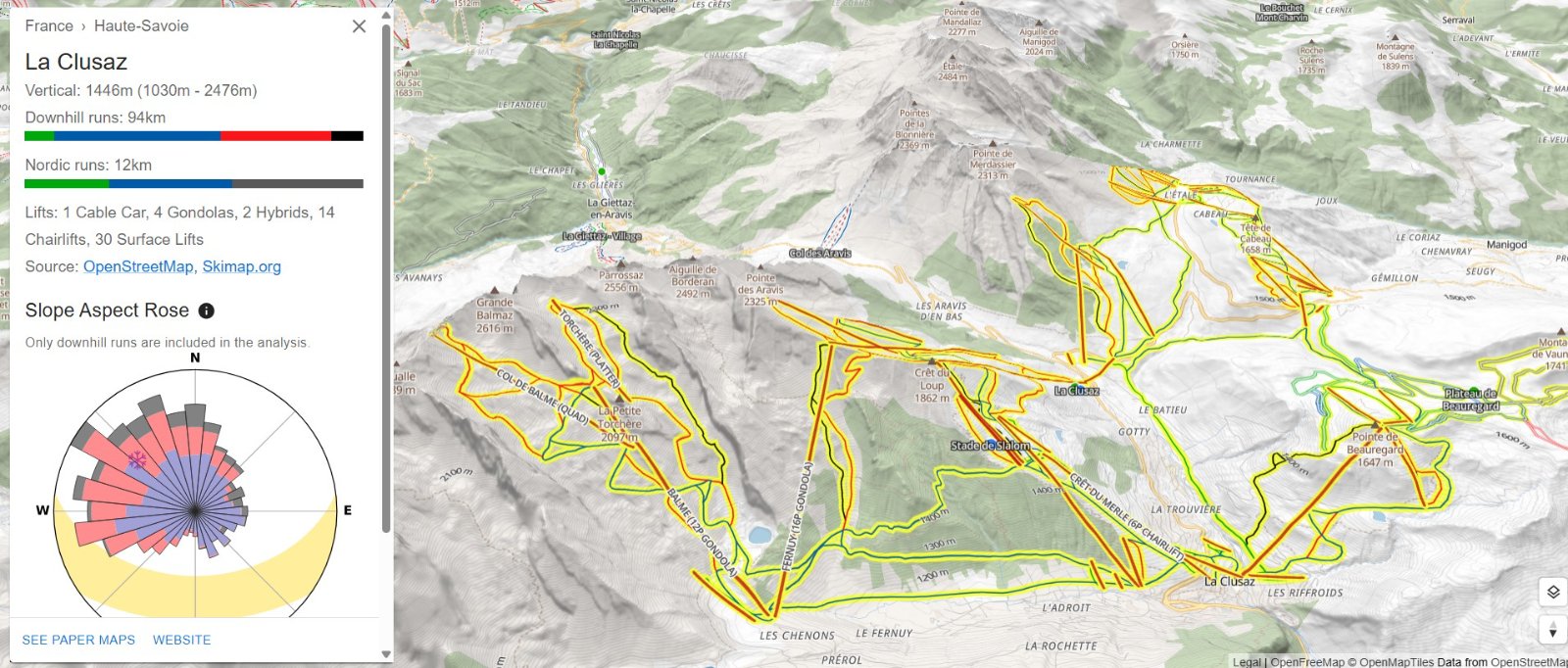
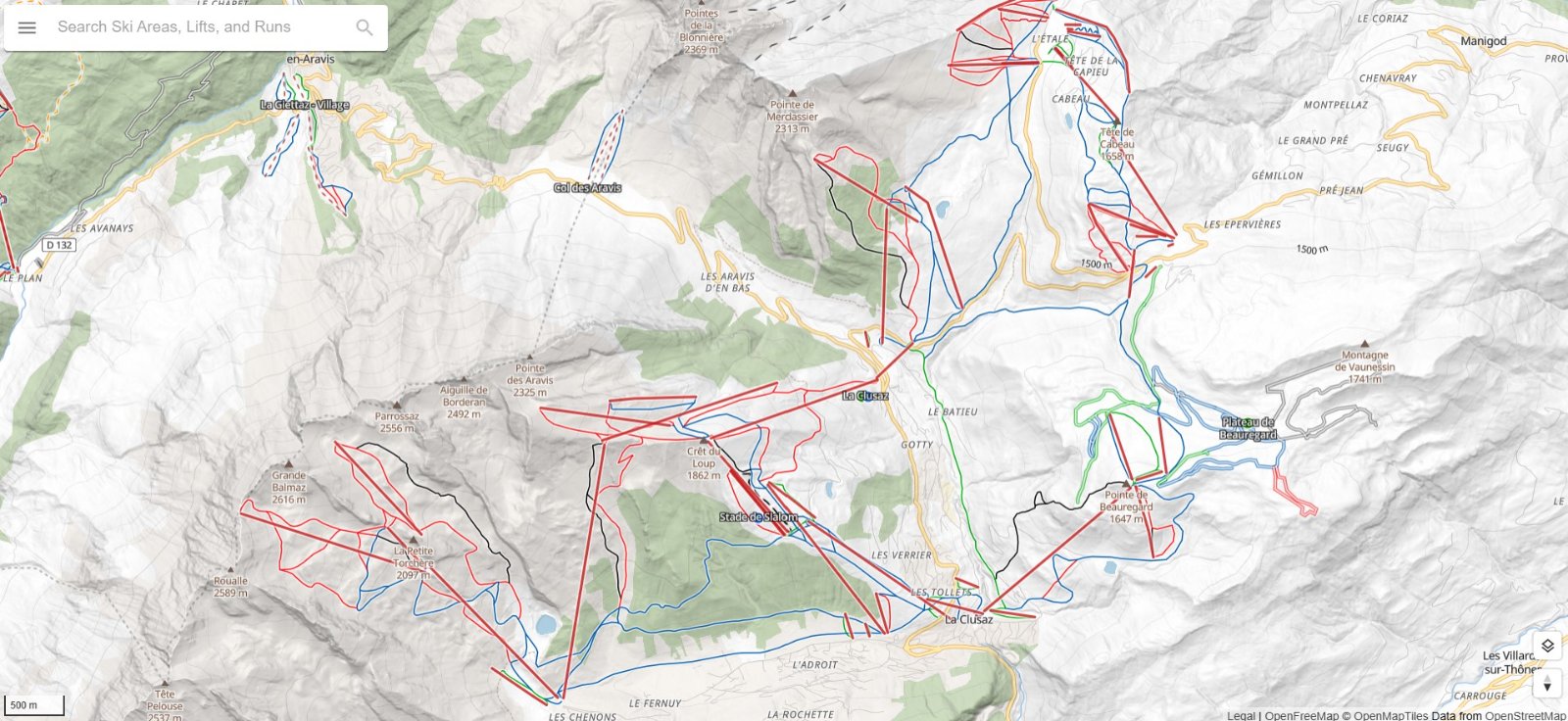
Topo Map 2D Version, North orientation. La Clusaz is a rather complex ski resort that a trail map cannot capture well.
For my base of operations, I stayed outside of La Clusaz near the Col des Aravis, unexpectedly choosing a chalet village rather than a traditional hotel - specifically the Hôtel les Chalets de la Serraz. Usually, I prefer to spend a night in the local village within walking distance of a lift, but La Clusaz's prices were high, and the hotel put me in a 2-room chalet for a Booking.com weeknight deal of $100/night. One of the more unique places I have stayed in the Alps.
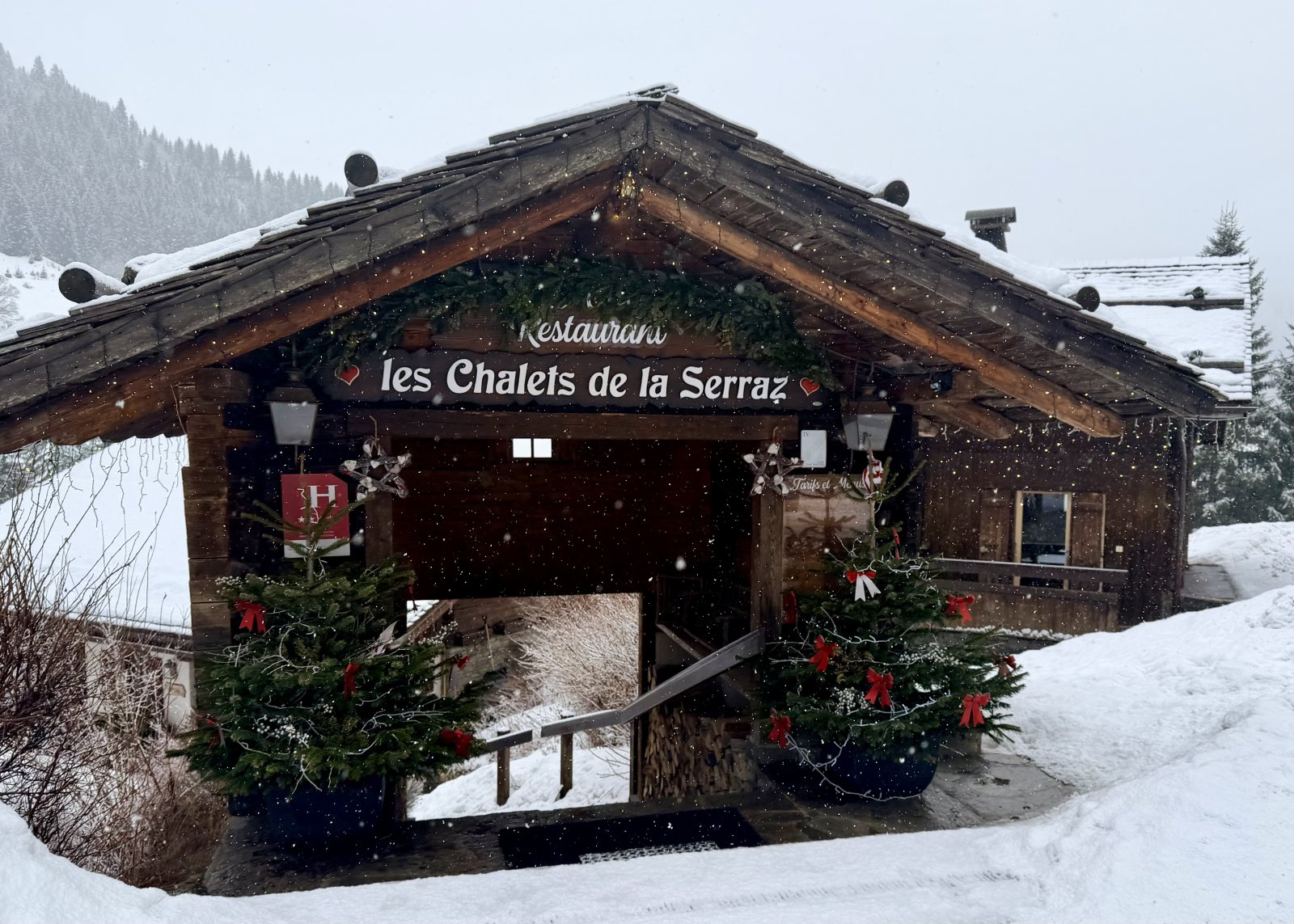
My Chalet
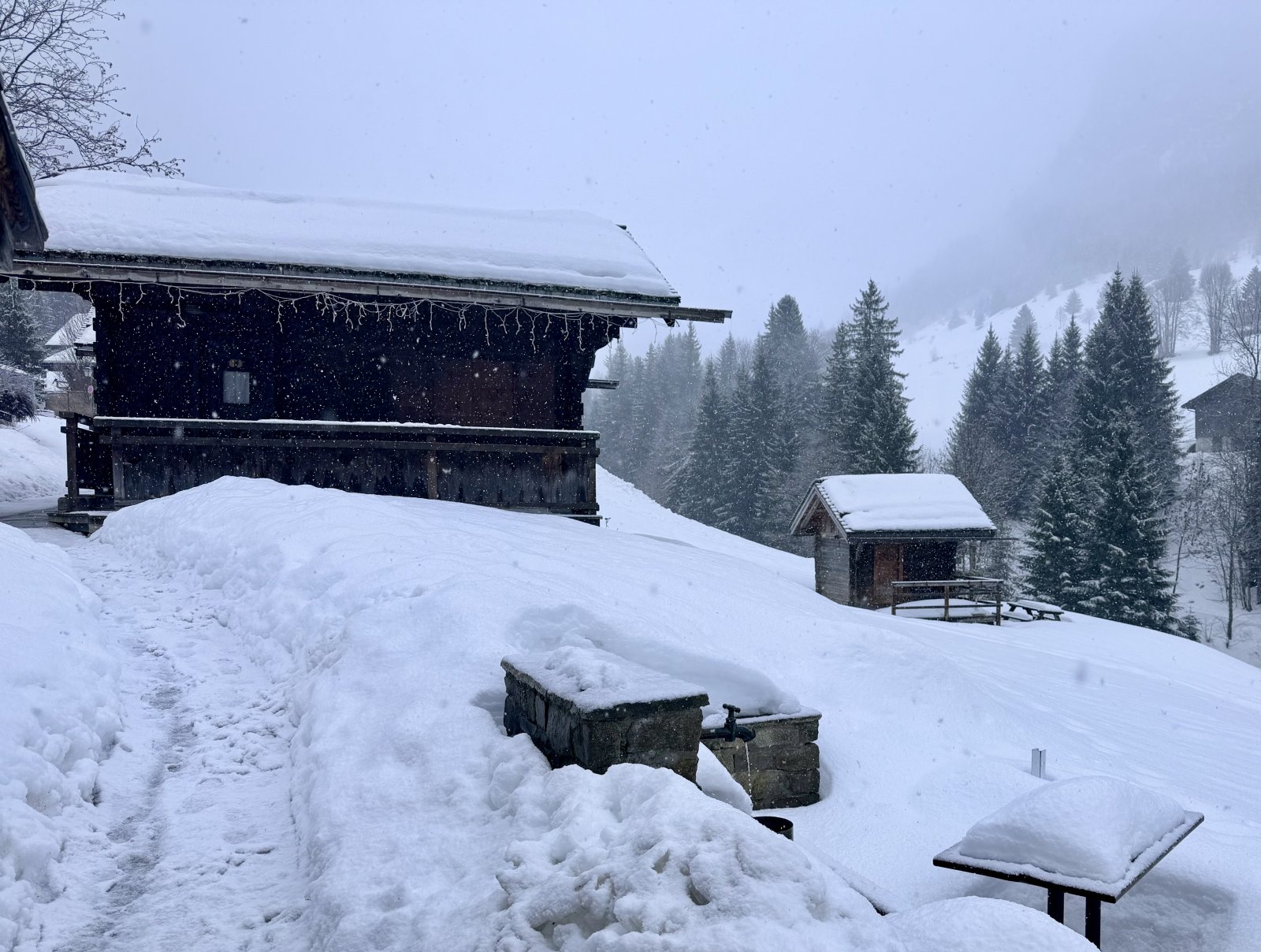
The following morning, with moderate snow falling, I drove to the base area above La Clusaz, nestled between the Massif de l'Aiguille (2400m) and the Massif de l'Etale (2400m), which serves as home to the TransVal Tram. It was clear that I needed to head toward the Col de Balme slopes, made famous by Candide Thovex. I ascended via the Combe des Juments high-speed double chair—a bit of a relic, dating back to 1980—straight into the clouds.
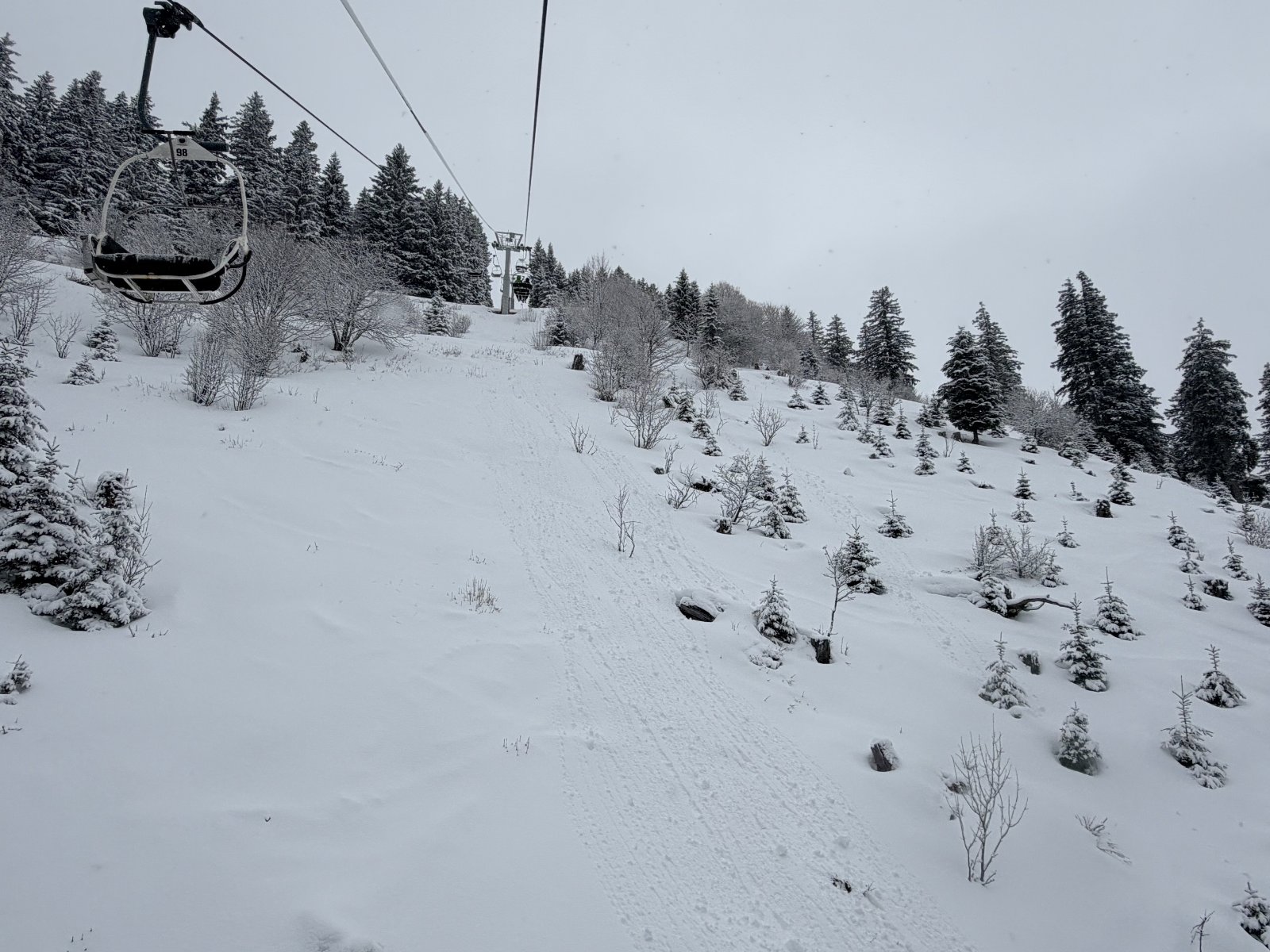
Aiguille Quad
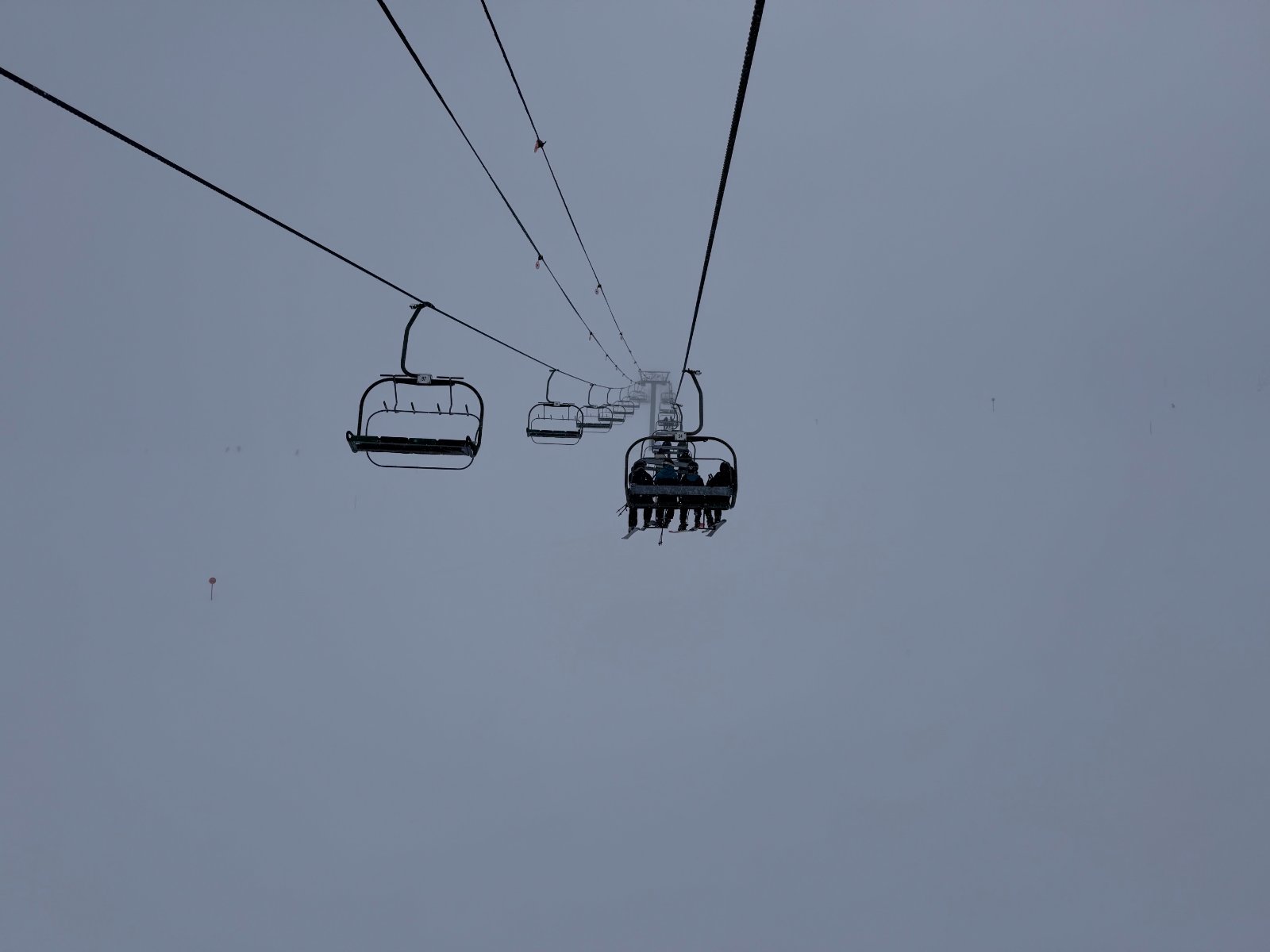
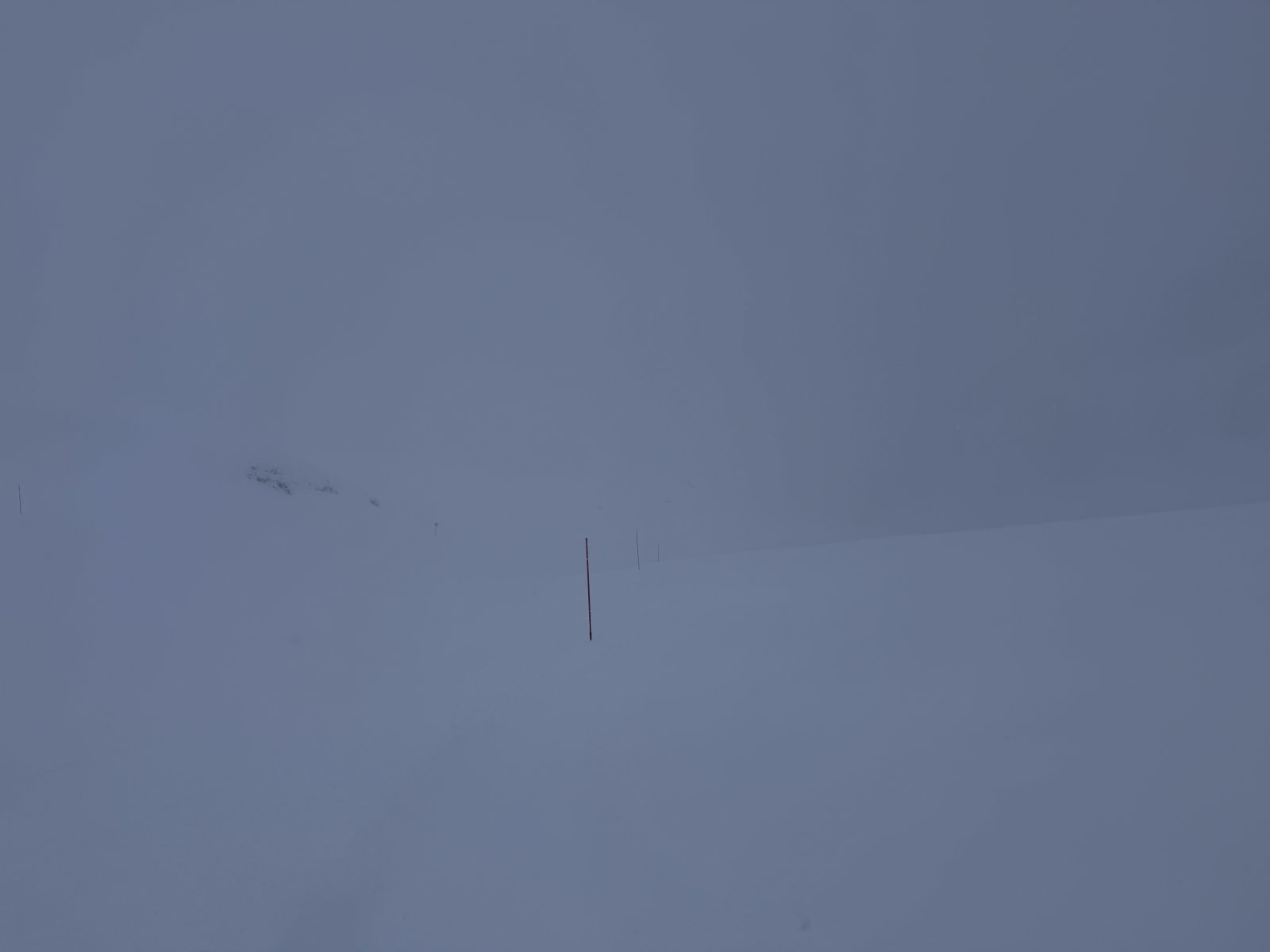
I generally have a high tolerance for storm-day skiing, especially having spent time in the Pacific Northwest; however, visibility was so poor that I was essentially slaloming by using the piste markers as my only reference points.
I then skied under the Fernuy Gondola to access the base of the Balme sector. It was an incredibly fun run with plenty of soft snow, interesting terrain features, and just enough tree cover to provide some much-needed visual reference during the storm.

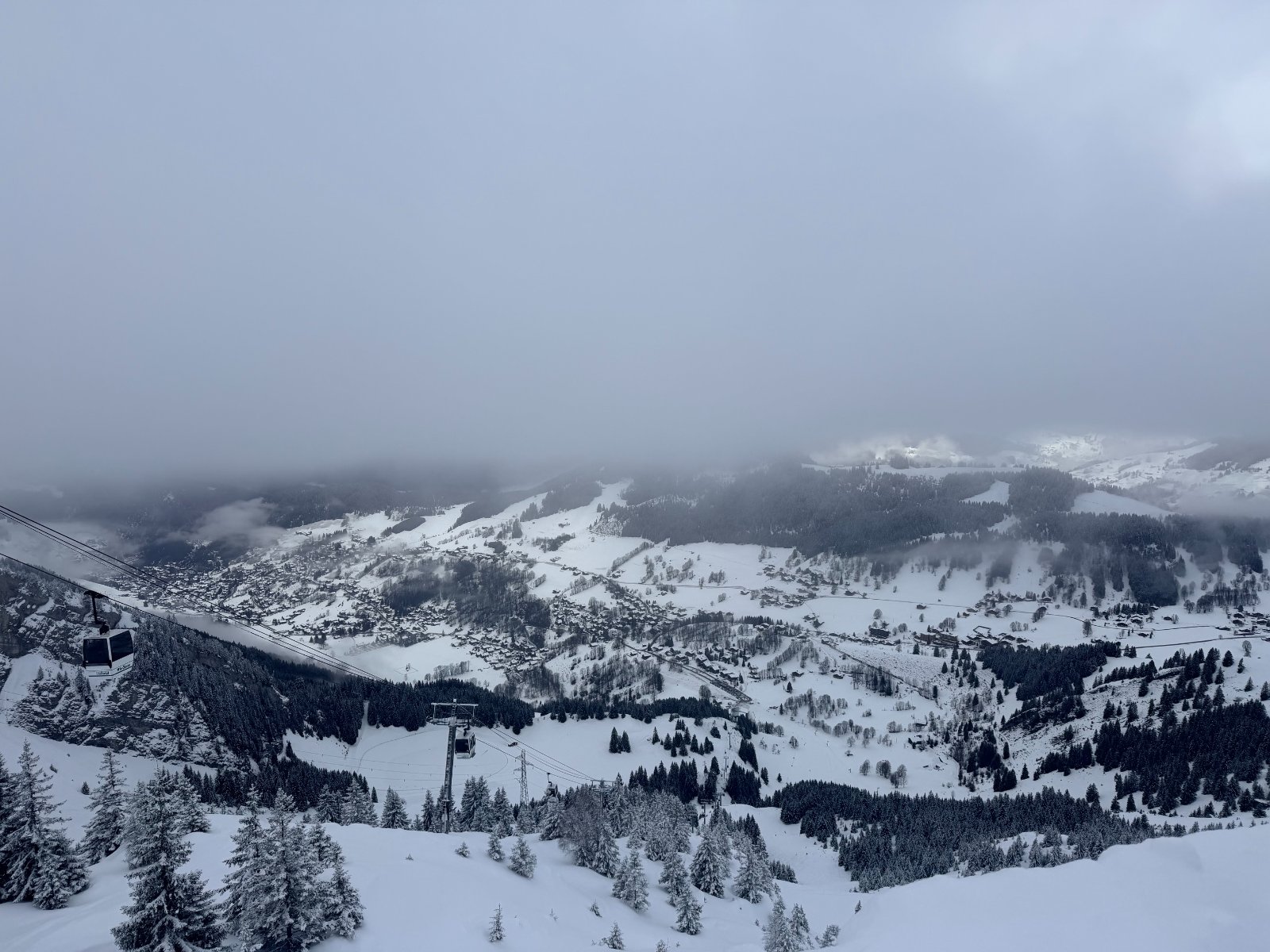
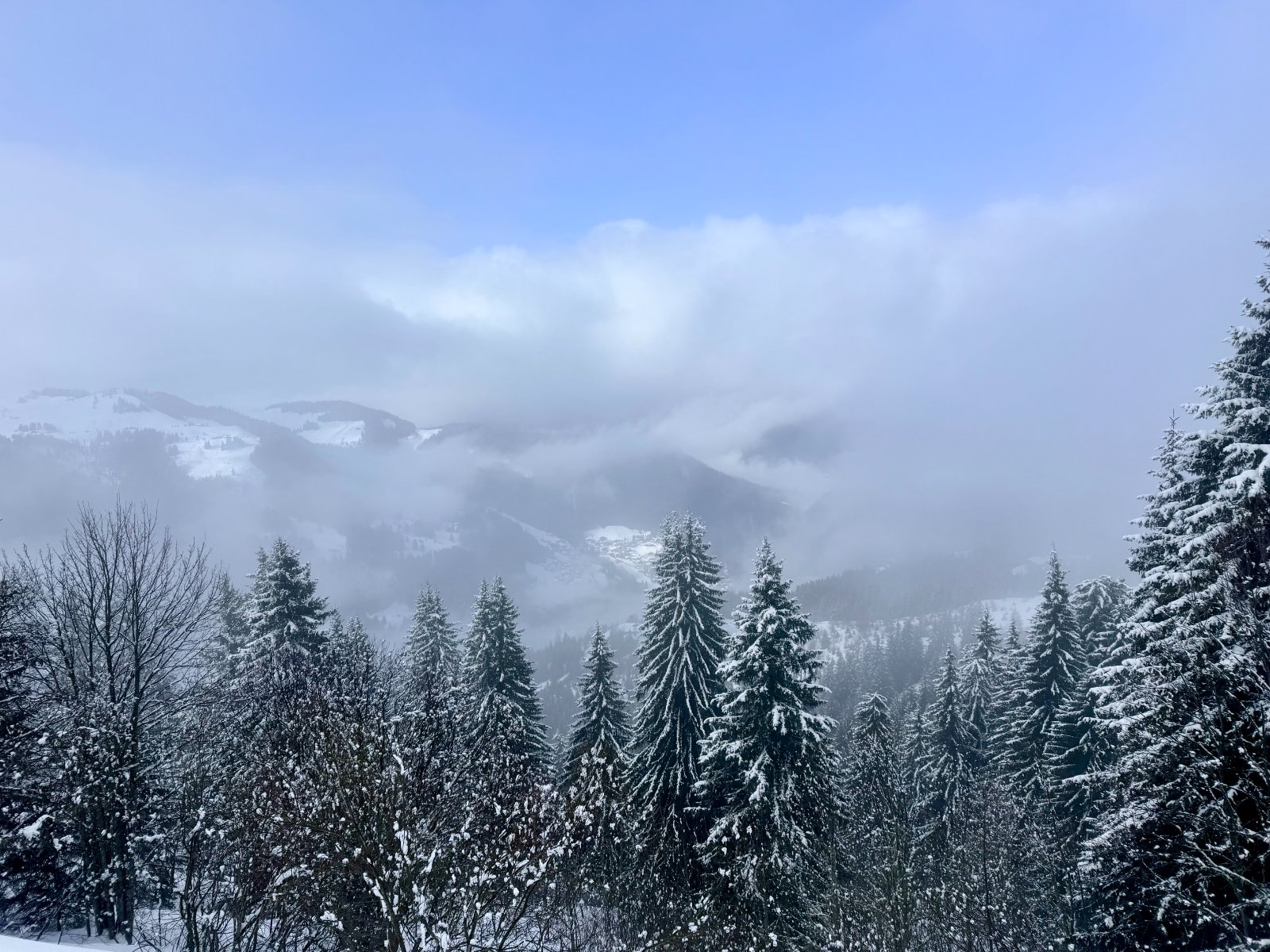
While riding the Balme gondola, the storm briefly parted to reveal the valley below. The snowline hovered between 1,000 and 1,200 meters, which proved significant since the base of the Balme sector sits just above 1,200 meters, while La Clusaz itself is at 1,000 meters. The day felt like a quintessential Pacific Northwest experience, with heavy snow bands rolling off the Atlantic and slamming into the Aravis Mountains. The resulting moisture gradient was distinct: the snow was deep and light at 2,000 meters, decent at 1,500 meters, and heavy, almost liquid, by the time I reached the base.
The slopes under the Bergerie Lift offered pristine powder-covered pistes with refreshingly low crowds. See the skiers enjoying roughly 10–25cm (6–10 inches) of fresh snow at the 2,000-meter mark, making for excellent conditions despite the storm. Less on the groomers.

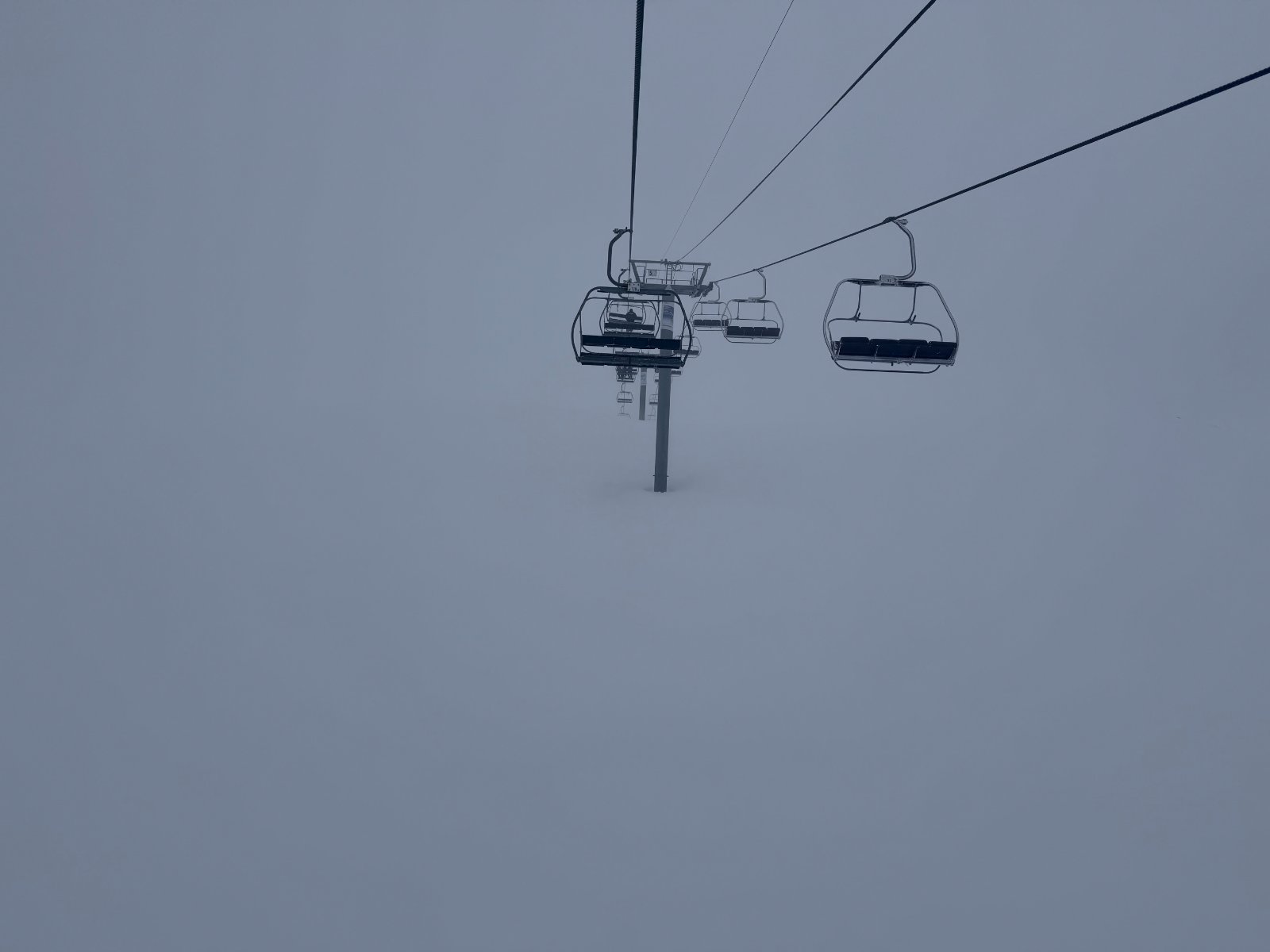
Again, a similar storm day photo: Col de Balme Lift. This is being upgraded to a HS bubble 6-pack.

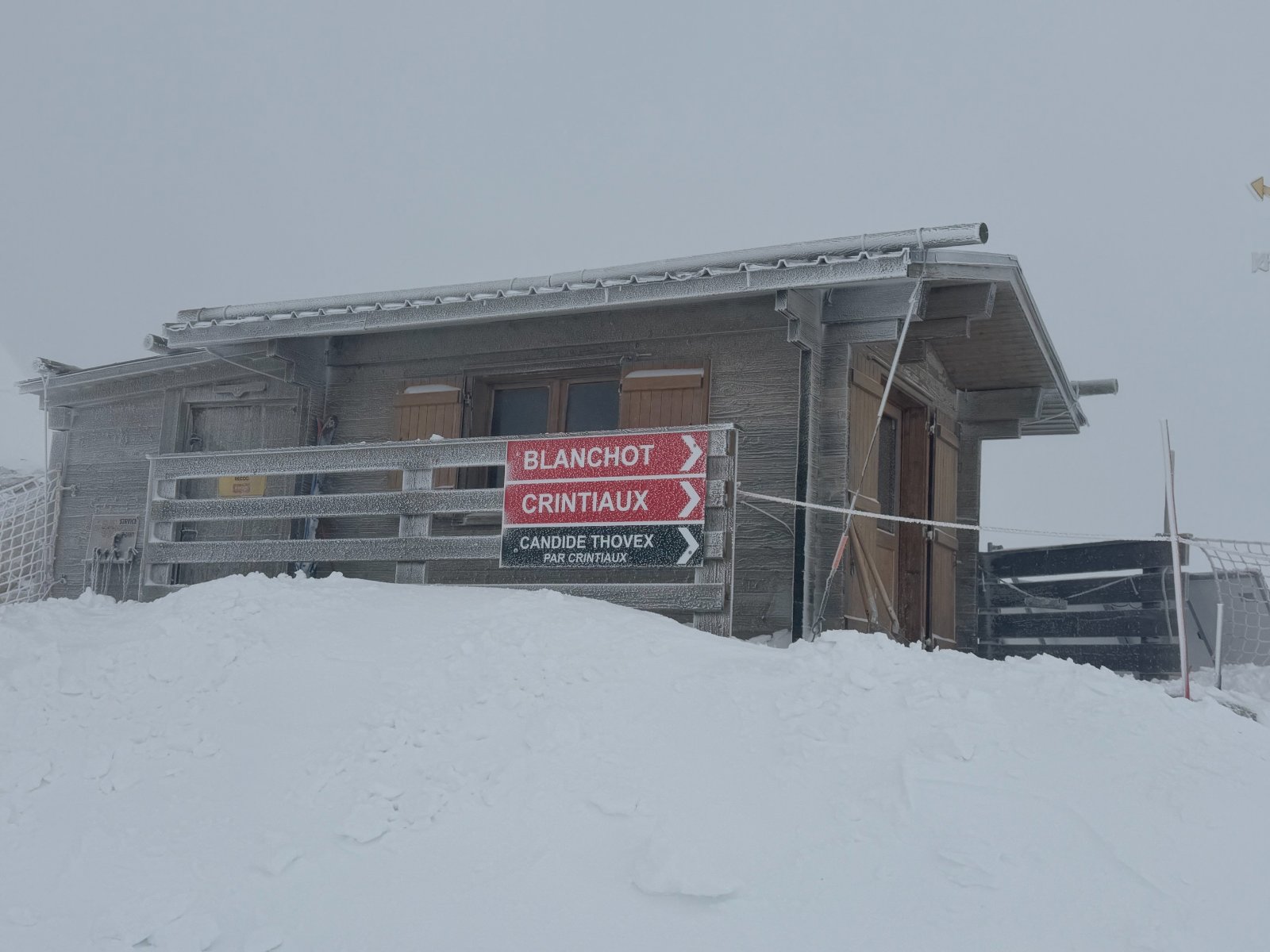
Summit Terminal. Candide Thovex got his own semi-controlled Freeride zone to the skier's right/looker's left of the chair!

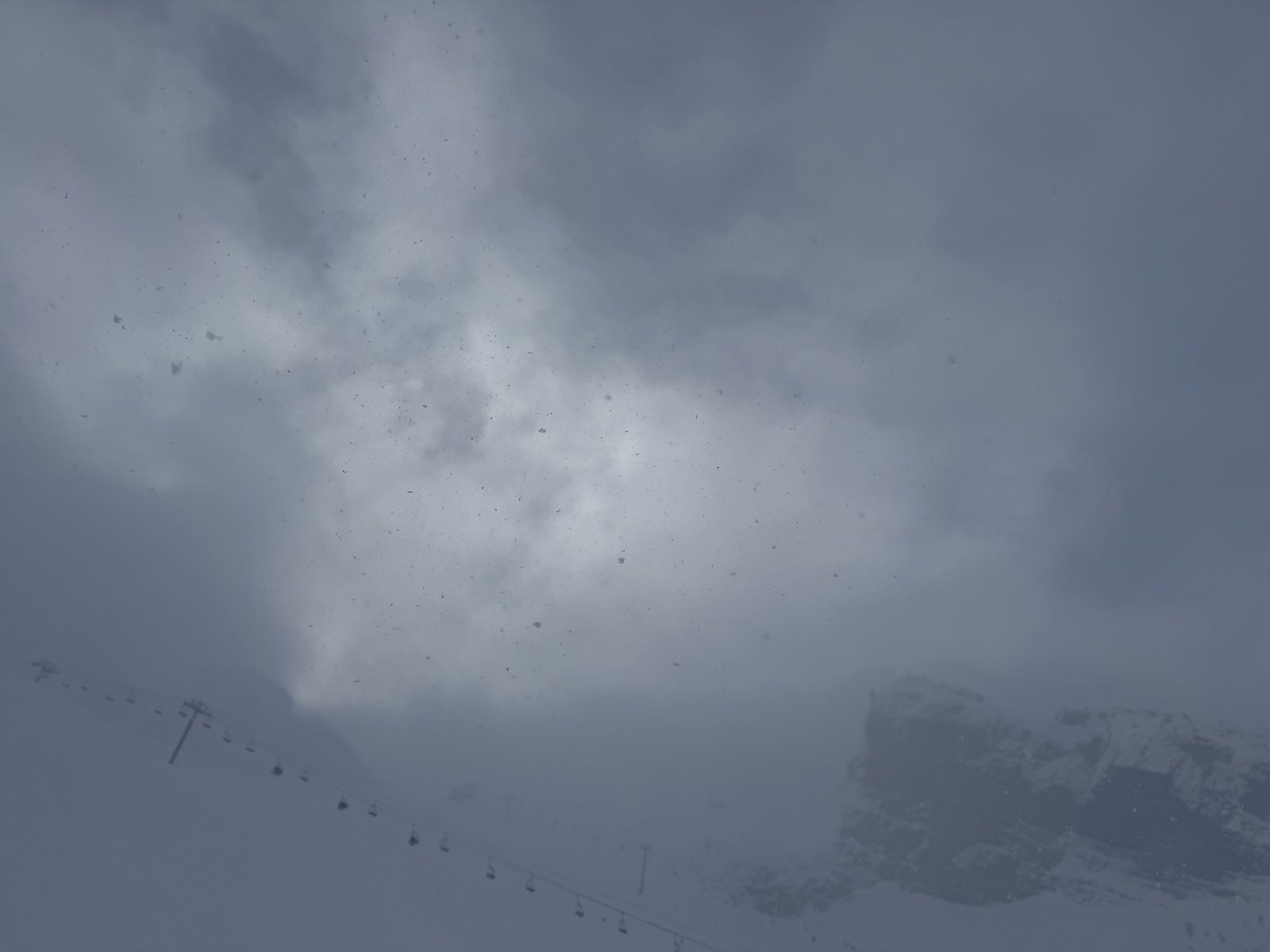
Again, visibility was all over the map: storm, clouds, snow squalls, sun breaks.
And braille powder skiing
Candide Thovex's zone

Big sun break! Game on! Le Petit Torchere 2097m

Taking some turns directly under the Roualle 2589m Balme high point. Skiing somewhere in the Candide zone, near the Les Crintiaux piste.

Again, not too much competition to run laps in the Col de Balme Lift sector
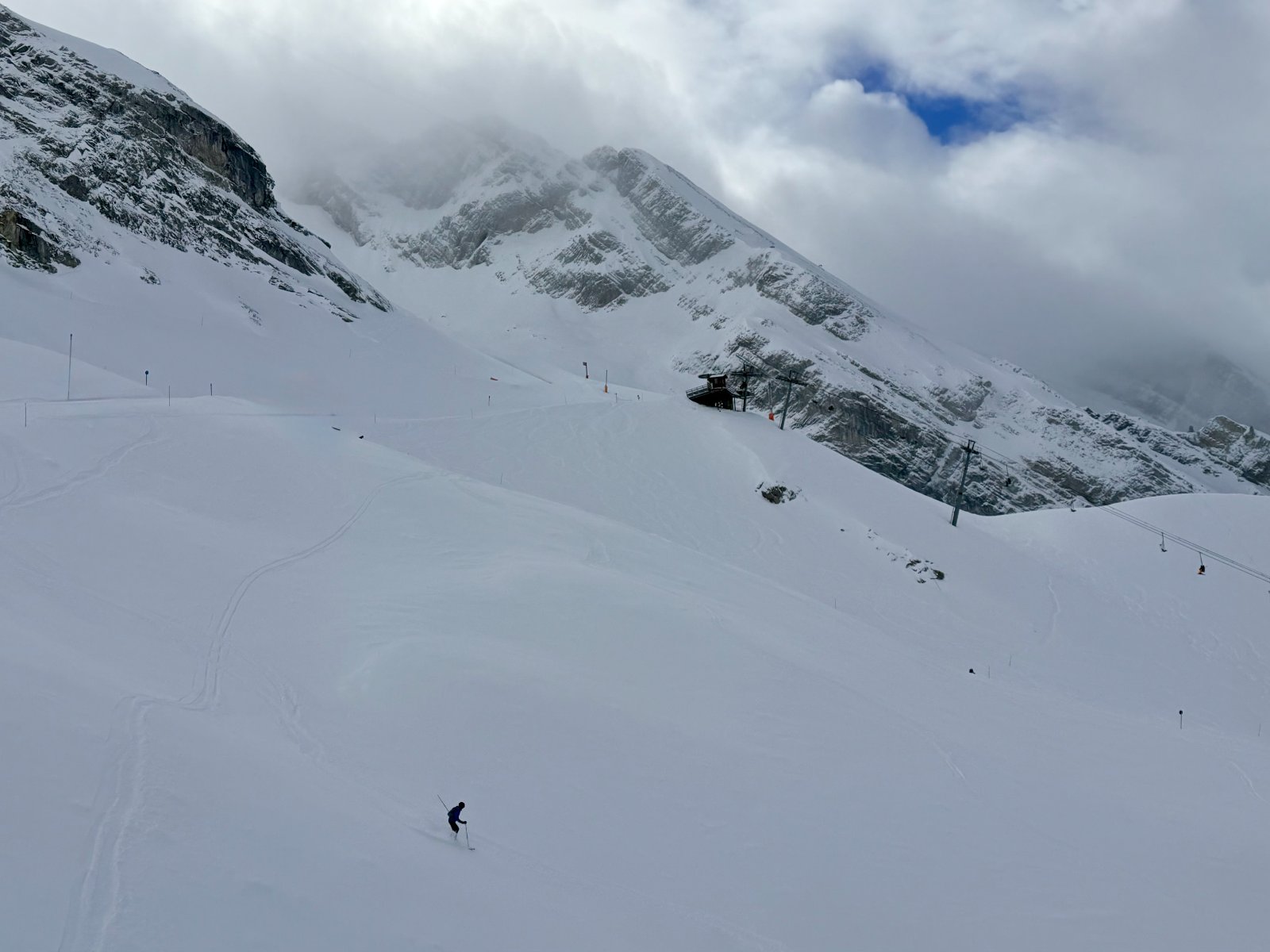
Looking left from the Col de Balme lift into the Candide Thovex zone

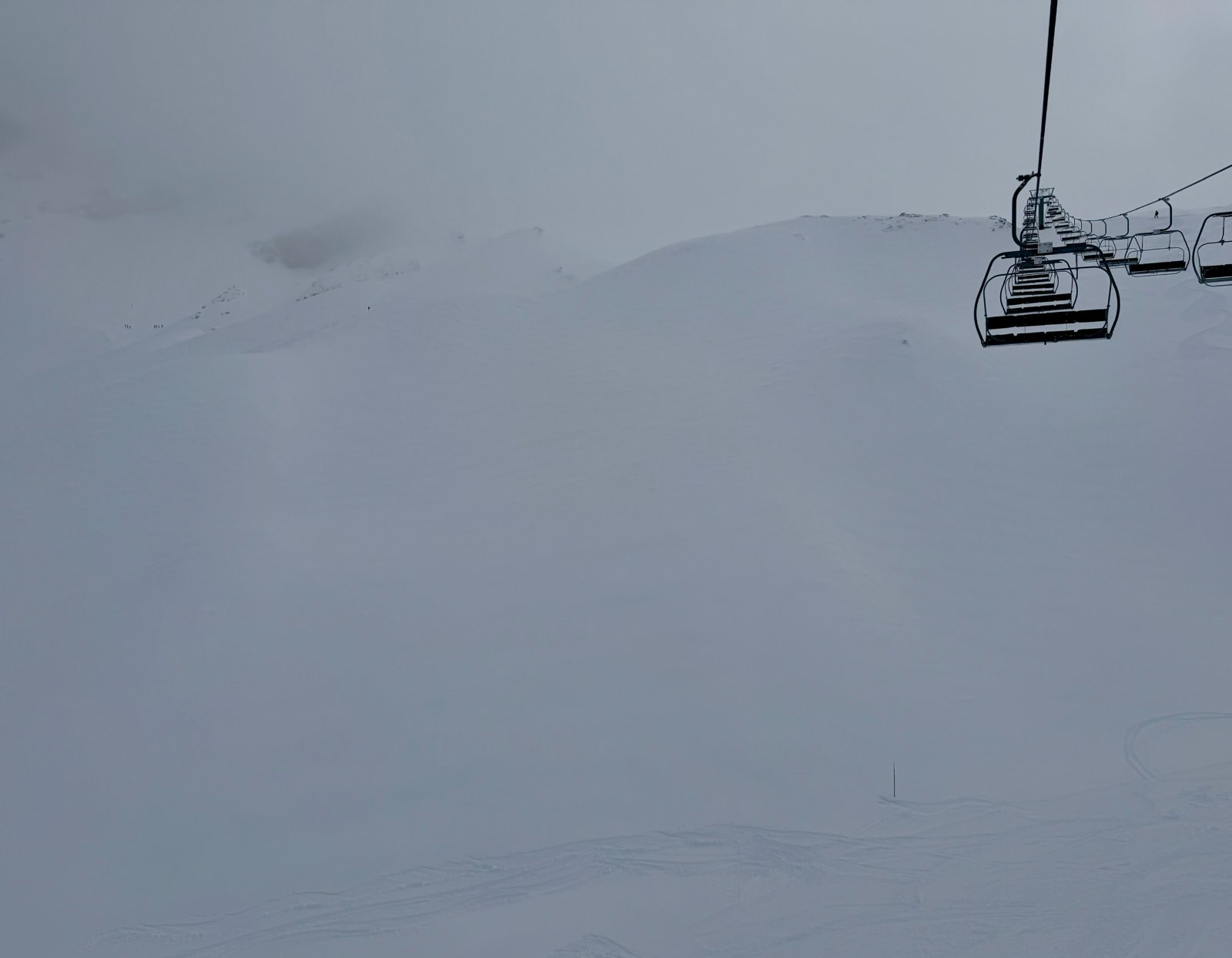
So much fun terrain! The stormy weather kept all the crowds inside. Just parked myself here all morning.
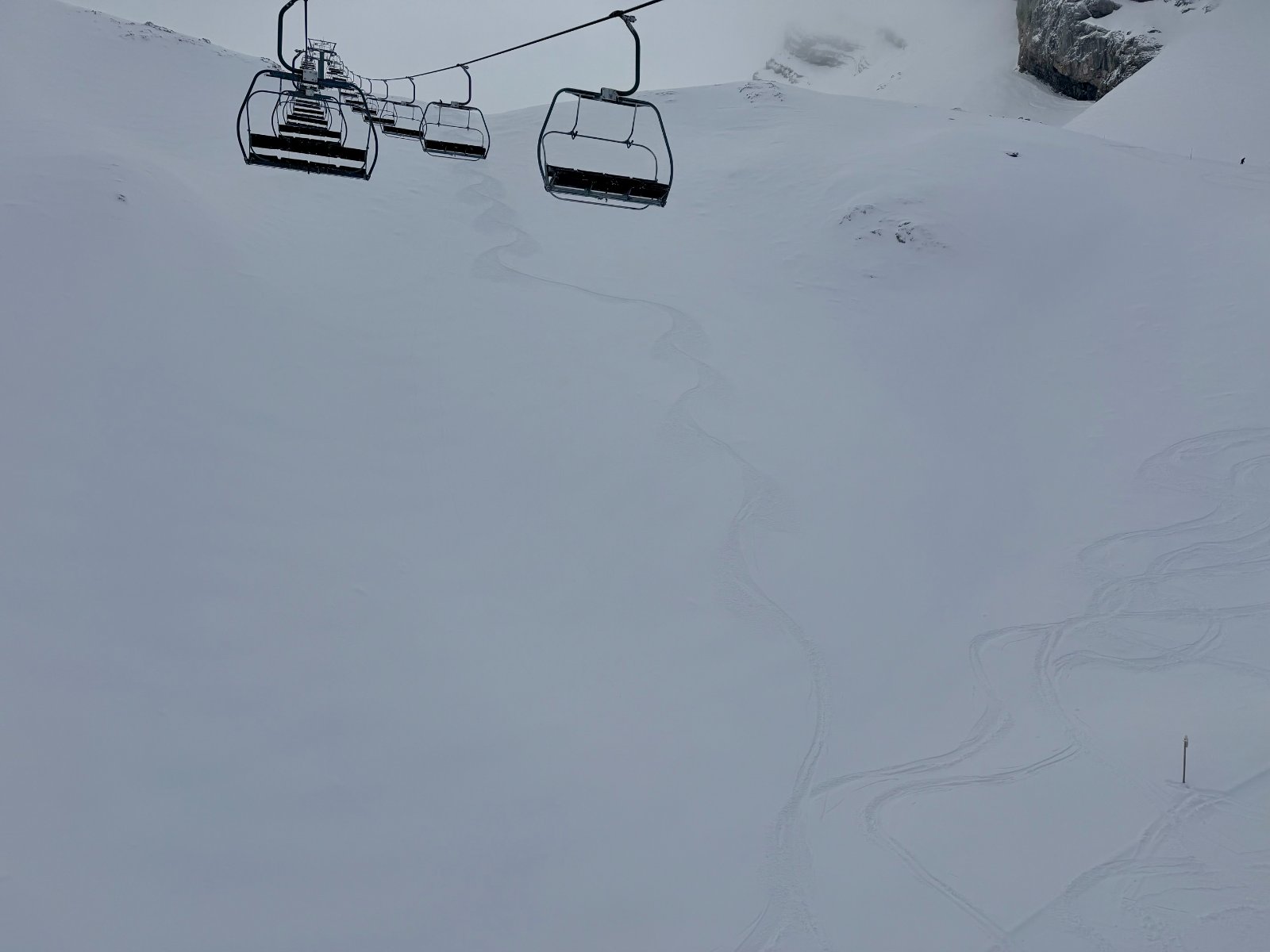
The Aravis Mountains are striking!

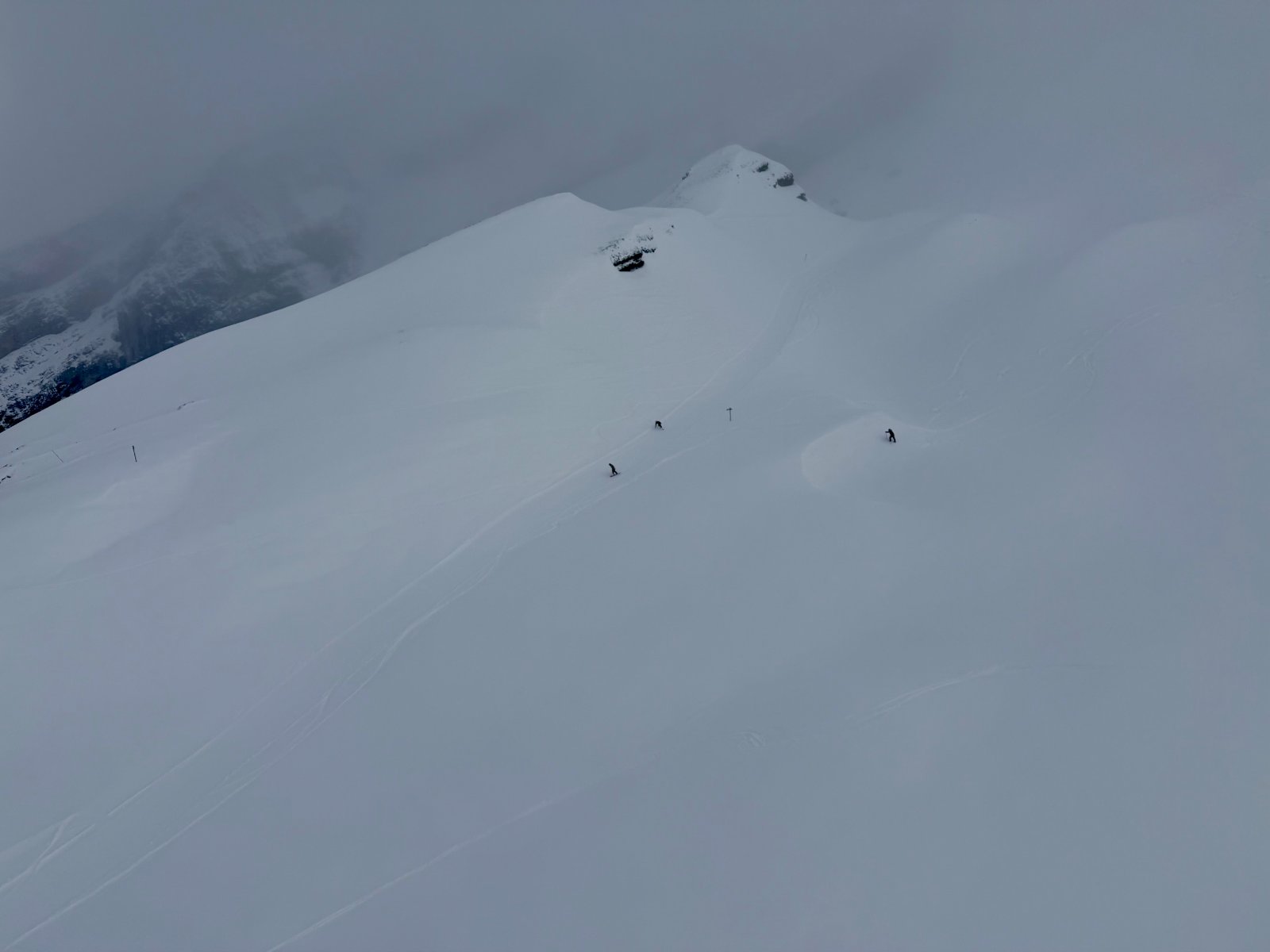
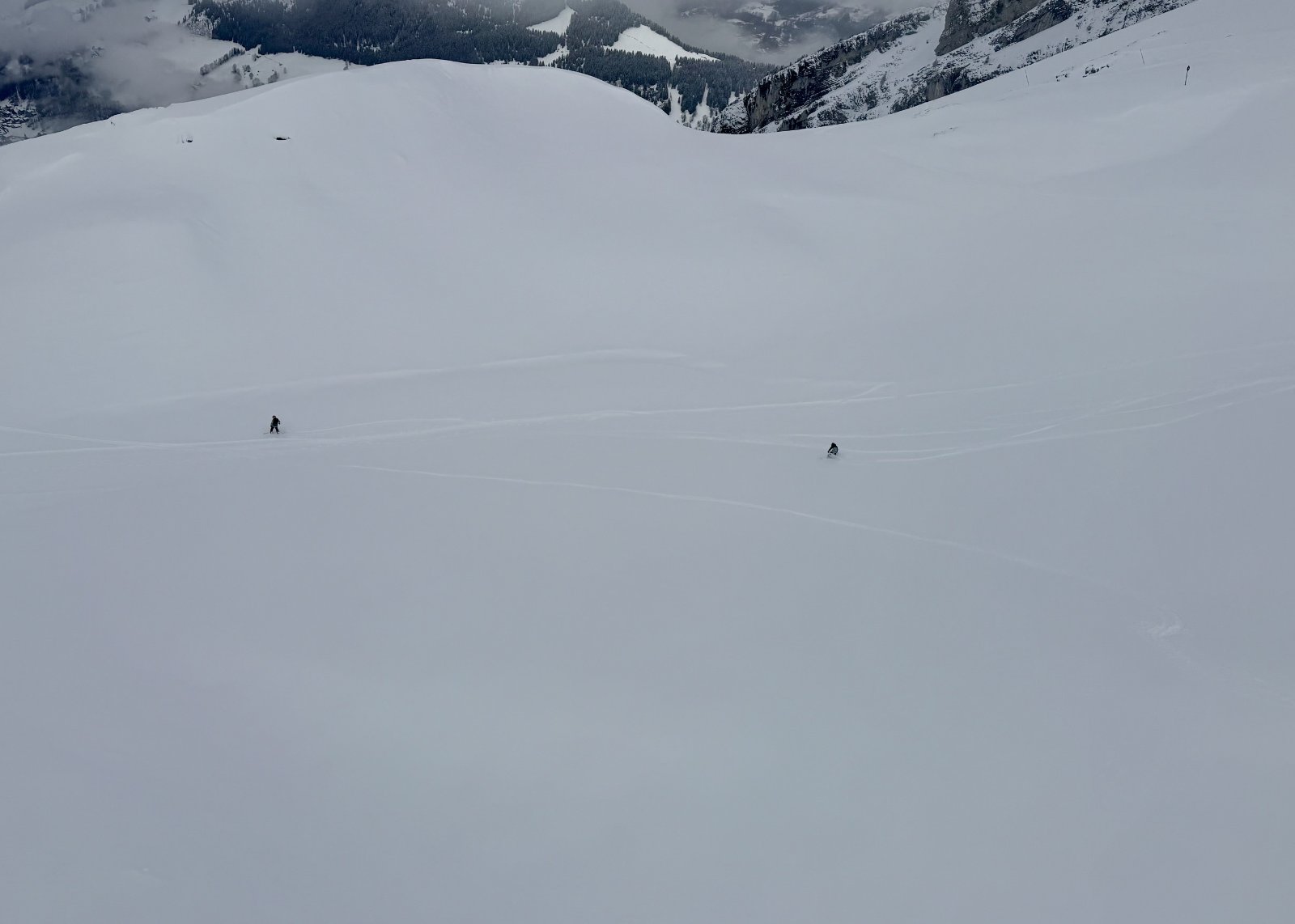
I finally explored the other high bowl in the Balme Sector, which is served by the Torchère Surface Lift. This allows access to black 'natural' state pistes like Vraille, which hug the cliffs on the west side of the bowl, and plunge nearly 1200m / 3800ft to the valley floor - long runs!

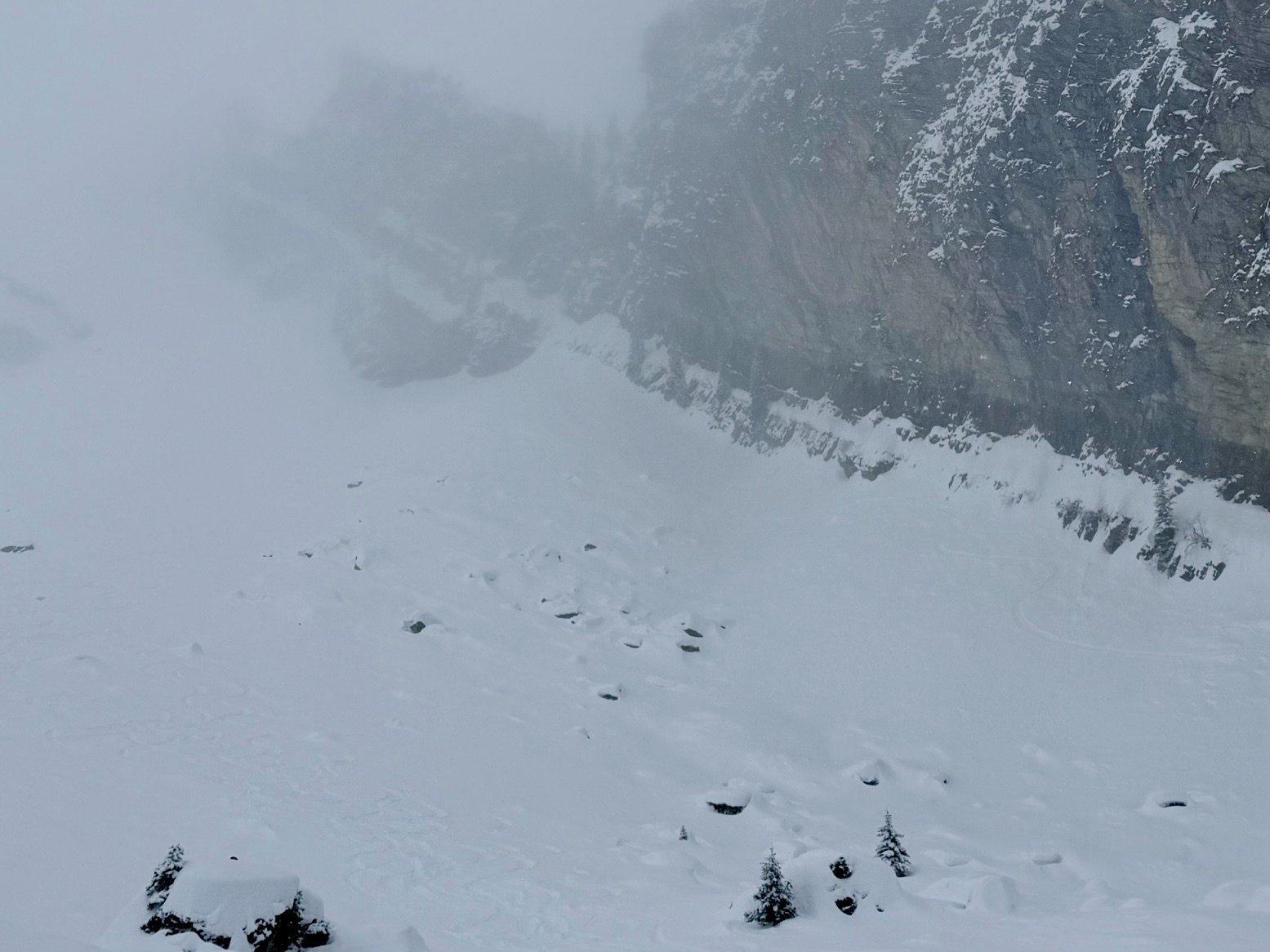
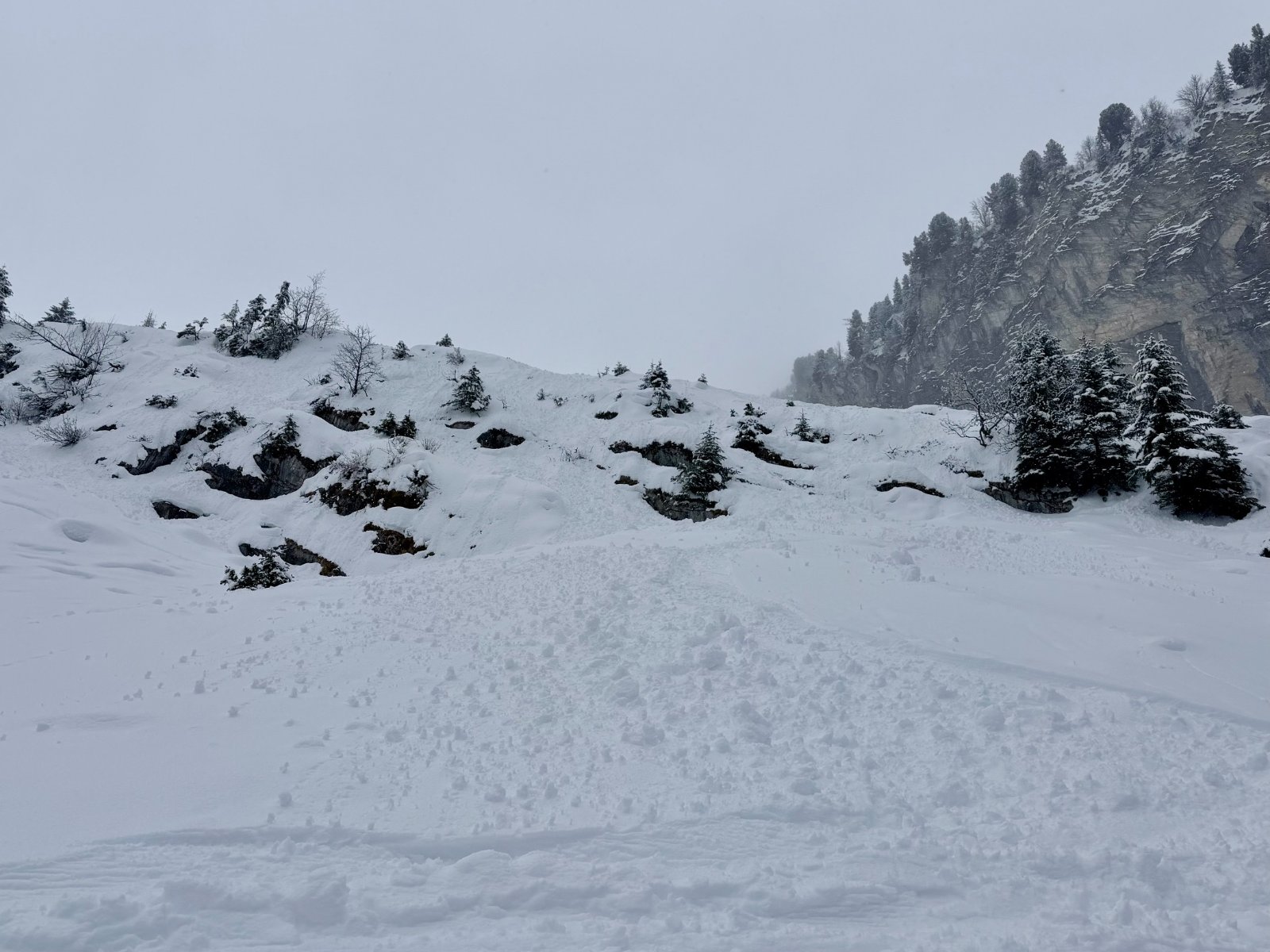

I am always watching ALL of the Webcams on storm days in the Alps to see where sun/storm breaks are occurring, and then go chase them. Not rocket science, just need to remember to do this (guides in St. Anton and Val d'Isere are chronically checking webcams!)
The top of the Col de Balme chair while I was skiing the top-to-bottom Balme runs. Mont Blanc should be visible on a clear day!
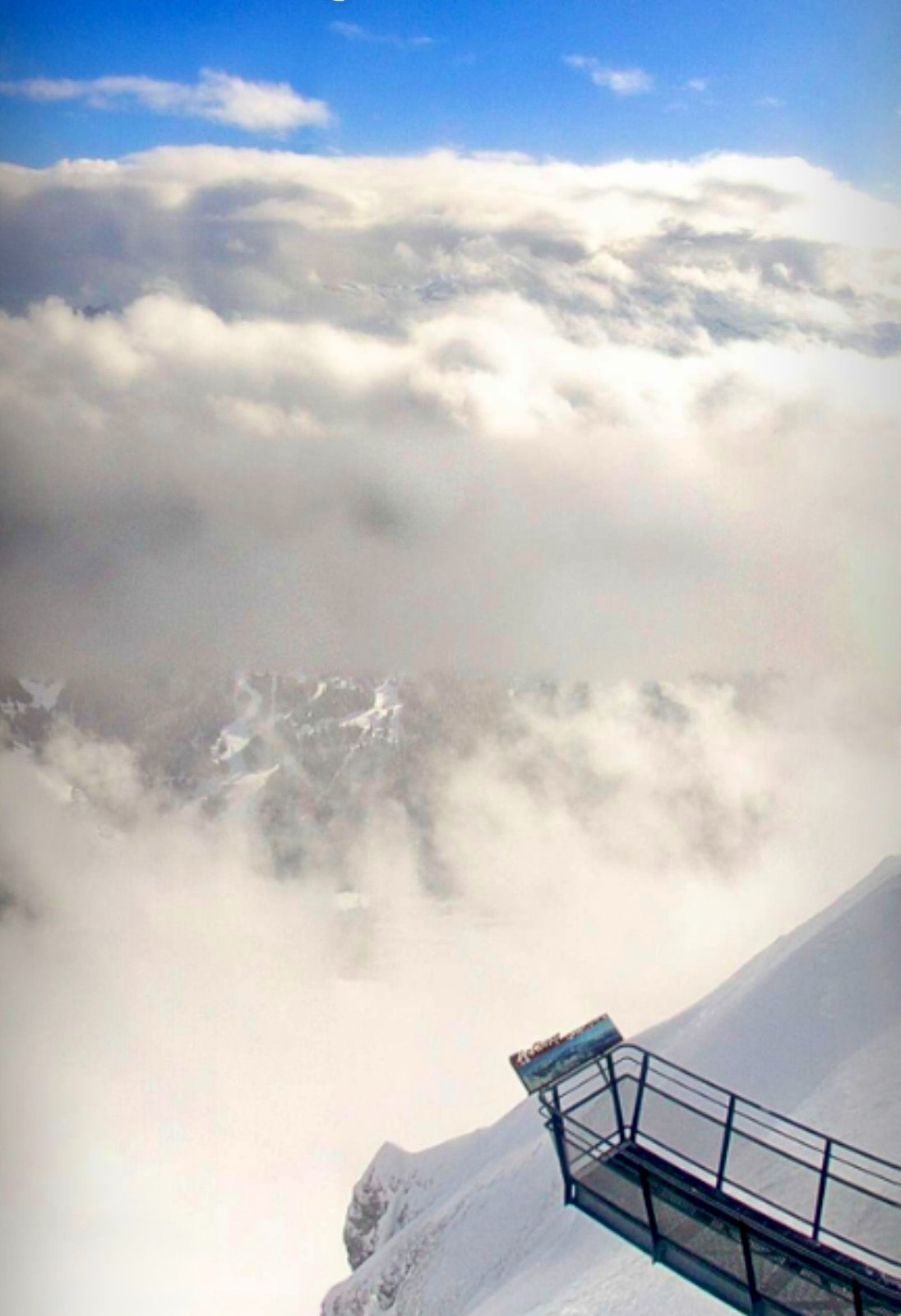
After a few more runs, it was getting past 12noon, so I decided to go check out the main sectors, maybe grab some food, and see what the weather would do. Below is a combination of Torchere and Lachat pistes, mostly left ungroomed.

Back in the main Sector above La Clusaz - Crete du Loup. One can see a few sun breaks behind the Bossonnet (6p hybrid) lift.

La Clusaz below
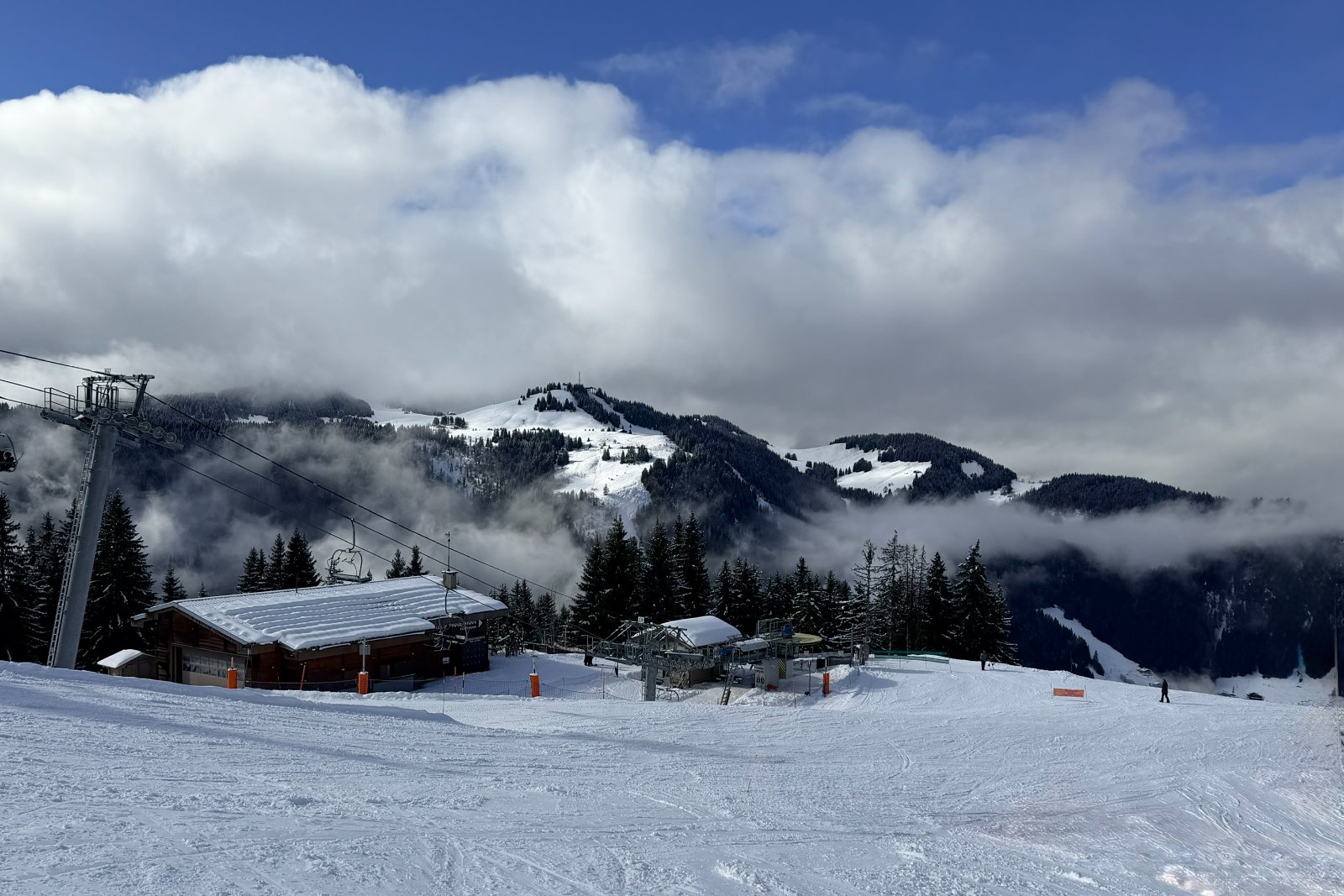
Finally, the sun came out around 1 PM, and I needed to decide what to do: return to the Le Balme sector? I had taken a few runs in the bowl under the Pointe des Aravis; should I repeat in broad sunlight? Below is the P'tit Loup (Quad) with the Massif de Beauregard 1690m in the bakcground.
(FYI, I have used 4 different guiding outfits in Val d'Isere; this time it was Alpine Experience, whom I recommend, link here. They are relatively small, but have a few groups on the hill to compare notes/conditions in real time.)
La Clusaz
La Clusaz is located in the Aravis Range (Chaîne des Aravis), a subrange of the French Pre-Alps in the Haute-Savoie. It's the home of freeride legend Candid Thovex (YouTube ski GOAT/OG) and has cultivated a true community of locals who can live there year-round and ski every line. Outside of Chamonix/Verbier, La Clusaz definitely has the strongest freeride scene near Geneva (one can gauge the number of fat skis in lift queues, especially France-made Black Crows), and the terrain to support it.
Snow & Terrain
Because the Aravis is the first major mountain range on the western side of the Alps, it captures significant snowfall from incoming weather fronts from the north to the west. It resembles the Pacific Northwest: heavy snow at altitude, with a resort base elevation barely above the standard/safe freezing level of 1000m. I felt at home. Overall, I assume the higher altitudes have among the highest annual snow totals in the Alps (e.g., Avoriaz, with its high resort-level snowfall compared to other French resorts).
The freeriding at La Clusaz is easily accessible, and hikes are mostly unnecessary or under 20 minutes. And although most skiers think of Le Balme when they think of La Clusaz, there is much more for experts/freeriders! Supposedly, it can take a few hours for Le Balme to open after a dump. However, there is a lot of great, underrated terrain around L'Etale and even in the Beauregard area. And some more or less obvious, hidden zones and trees around L'Aiguille. However, 'Powder Panic' does exist at La Clusaz, and there is competition (from locals living around La Clusaz and the larger cities of Annecy and Geneva), but mostly on weekends. Luckily, I was skiing on a weekday with new snow. (Note: The vibe and potential crowding are the antithesis of Ste. Foy, with its mostly resort-oriented clientele, low competition, powder that can last for days, higher altitude/better snow quality, and sidecountry that requires more effort to access.)
To quote Powder Hounds from their La Clusaz day here
Through cunning observation, we snuck ahead of the pack onto the resort's highest chair & plundered steep, waist-deep powder below the Col de Balme. We got a second run in before the entire upper bowl was smashed by the frenzied humanity. Fun, though, & certainly super-quality, steep freeride terrain that few places have straight off a lift. Staying off-piste, the lower half of the 1200m+ skiable vertical via the Combe de Balme gradually turned into elephant snot, then glue, then crud, then ice. The base levels at La Clusaz are too low for quality snow. In Austria, 1000 to 1200m elevation is ok, but questionable; in France, it is nearly ridiculous these days.
Layout
The local ski area of La Clusaz is spread across five interconnected mountains within this region (from left to right on the trail map below):
- Balme: Famous for its steep powder bowls and freeride terrain.
- L’Aiguille: Offers long, steep pistes and spectacular views, and great tree-skiing
- L’Étale: Characterized by challenging, long runs in bowls and large open alpine meadows.
- Beauregard: Features gentler, forested terrain and a scenic plateau.
- Manigod: The final connected sector, known for gentle slopes and excellent night skiing
OpenSkiMaps
Topo Map 2D Version, North orientation. La Clusaz is a rather complex ski resort that a trail map cannot capture well.
For my base of operations, I stayed outside of La Clusaz near the Col des Aravis, unexpectedly choosing a chalet village rather than a traditional hotel - specifically the Hôtel les Chalets de la Serraz. Usually, I prefer to spend a night in the local village within walking distance of a lift, but La Clusaz's prices were high, and the hotel put me in a 2-room chalet for a Booking.com weeknight deal of $100/night. One of the more unique places I have stayed in the Alps.
My Chalet
The following morning, with moderate snow falling, I drove to the base area above La Clusaz, nestled between the Massif de l'Aiguille (2400m) and the Massif de l'Etale (2400m), which serves as home to the TransVal Tram. It was clear that I needed to head toward the Col de Balme slopes, made famous by Candide Thovex. I ascended via the Combe des Juments high-speed double chair—a bit of a relic, dating back to 1980—straight into the clouds.
Aiguille Quad
I generally have a high tolerance for storm-day skiing, especially having spent time in the Pacific Northwest; however, visibility was so poor that I was essentially slaloming by using the piste markers as my only reference points.
I then skied under the Fernuy Gondola to access the base of the Balme sector. It was an incredibly fun run with plenty of soft snow, interesting terrain features, and just enough tree cover to provide some much-needed visual reference during the storm.
While riding the Balme gondola, the storm briefly parted to reveal the valley below. The snowline hovered between 1,000 and 1,200 meters, which proved significant since the base of the Balme sector sits just above 1,200 meters, while La Clusaz itself is at 1,000 meters. The day felt like a quintessential Pacific Northwest experience, with heavy snow bands rolling off the Atlantic and slamming into the Aravis Mountains. The resulting moisture gradient was distinct: the snow was deep and light at 2,000 meters, decent at 1,500 meters, and heavy, almost liquid, by the time I reached the base.
The slopes under the Bergerie Lift offered pristine powder-covered pistes with refreshingly low crowds. See the skiers enjoying roughly 10–25cm (6–10 inches) of fresh snow at the 2,000-meter mark, making for excellent conditions despite the storm. Less on the groomers.
Again, a similar storm day photo: Col de Balme Lift. This is being upgraded to a HS bubble 6-pack.
Summit Terminal. Candide Thovex got his own semi-controlled Freeride zone to the skier's right/looker's left of the chair!
Again, visibility was all over the map: storm, clouds, snow squalls, sun breaks.
And braille powder skiing
Candide Thovex's zone
Big sun break! Game on! Le Petit Torchere 2097m
Taking some turns directly under the Roualle 2589m Balme high point. Skiing somewhere in the Candide zone, near the Les Crintiaux piste.
Again, not too much competition to run laps in the Col de Balme Lift sector
Looking left from the Col de Balme lift into the Candide Thovex zone
So much fun terrain! The stormy weather kept all the crowds inside. Just parked myself here all morning.
The Aravis Mountains are striking!
I finally explored the other high bowl in the Balme Sector, which is served by the Torchère Surface Lift. This allows access to black 'natural' state pistes like Vraille, which hug the cliffs on the west side of the bowl, and plunge nearly 1200m / 3800ft to the valley floor - long runs!
I am always watching ALL of the Webcams on storm days in the Alps to see where sun/storm breaks are occurring, and then go chase them. Not rocket science, just need to remember to do this (guides in St. Anton and Val d'Isere are chronically checking webcams!)
The top of the Col de Balme chair while I was skiing the top-to-bottom Balme runs. Mont Blanc should be visible on a clear day!
After a few more runs, it was getting past 12noon, so I decided to go check out the main sectors, maybe grab some food, and see what the weather would do. Below is a combination of Torchere and Lachat pistes, mostly left ungroomed.
Back in the main Sector above La Clusaz - Crete du Loup. One can see a few sun breaks behind the Bossonnet (6p hybrid) lift.
La Clusaz below
Finally, the sun came out around 1 PM, and I needed to decide what to do: return to the Le Balme sector? I had taken a few runs in the bowl under the Pointe des Aravis; should I repeat in broad sunlight? Below is the P'tit Loup (Quad) with the Massif de Beauregard 1690m in the bakcground.
Attachments
Last edited:




 I would rather save time/money and go ski in-bounds Canada - Whistler, Revelstoke, Kicking Horse, Red Mt, Whitewater, Lake Louise, Sunshine - with some cat/heli days.


 When we were there all the pistes were winter packed powder without a trace of firm subsurface on the top 3,000 vertical at least. Ungroomed near the pistes was nearly all wind blown sastrugi with some breakable crust. I can't say I was surprised given ChrisC's review when he skied there.