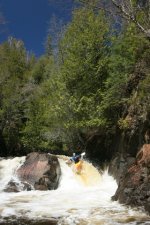
(non-skiing) Erickson Lakes, Uinta Mts, Utah 9/6-7/09

Admin

Administrator
Staff member
Labor Day weekend, so we had to get out of Dodge. We were looking to stay remote, so we opted for the Erickson Lakes in the far western end of the Uinta Mountains. Stephan and I hatched plans, and his friend Natalie came along for her virgin backpacking trip.

http://maps.google.com/maps?f=q&source= ... 8&t=p&z=14

Hard to believe that this area is only 45 minutes from Salt Lake City. Or it would've been, were it not for the last 7 miles on Norway Flat "Road" east of Samak, rising north from Mirror Lake Highway (UT 150) which took 90 minutes to negotiate. Most hiking trails I've been on are smoother!

01 uintas norway flat rd 090906.jpg


This road is completely impassable without a high clearance 4x4. We only hit bottom once, at a spot near the end where folks had already stacked rocks to smooth the drop off a ledge. The thought of trying to get back up that spot lingered in my head all weekend.

But we made it to the end, beyond which motorized travel is prohibited, and booted up to hit the trail. The trail first drops precipitously into a gorge, then gradually climbs back out to a bog that's already showing signs of the waning summer as it's now brown rather than green:

02 uintas bog norway flat 090906.jpg


We briefly lost the trail here, as we would several times during the trip. This is an extremely uncrowded portion of the Uintas and much of the time there was no visible trail. All we could do is look ahead for the next cairn.

After crossing the bog the trail ascends very steeply to Big Elk Lake. We lost the trail again as we approached the dam, scrambling hand over foot up a small cliff to reach the lakeshore.

There were four guys fishing from the cliffs at the northwest end of the lake as we walked up the east shore, rounded the north side and began to once again ascend steeply to Erickson Pass. Thankful for the stiff breeze, we finally reached the top and began descending to South Erickson Lake. I stopped in my tracks for a moment, having spotted in the distance some large creatures milling about the lake's inlet. Moose? Elk?

Cows.

The portion of the Wasatch-Cache National Forest we were in is open range summer grazing land for several herds, and one had decided to spend the day at our planned destination. We got closer, but the cows wouldn't let us approach within 50 feet, stomping off into the brush when we got too close for their comfort. We arrived at the lake to find a well-established campsite along with a homemade corral built amongst the trees, but instead we pitched camp in some nice grassland near the shore that was wonderfully devoid of peppermint patties.

We had a very curious audience as we pitched our tents:

03 uintas s erickson lk stephan and cows 090906.jpg


They emerged from the trees as we made camp, getting as close as they dared and then just stood there, staring. The two black ones in the photo and a third white one would return repeatedly -- they were the gutsy ones, or perhaps they were just the herd's designees charged with keeping an eye on us. Who knows?

We filtered water, gathered firewood and prepared dinner at camp:

04 uintas s erickson lk camp 090906.jpg


I dropped a line in the water, as much out of a sense of obligation for having renewed my fishing license that morning as anything else. Nothing, not even a nibble.

05 uintas s erickson lk 090906.jpg


Natalie attempted a circumnavigation of the lake -- not as easy as it sounds due to a heinous scree field along the south shore -- as Stephan and I wandered down to North Erickson Lake, finding another beautiful body of water filled with lily pads, reflecting the ridgeline beyond as the sun set:

06 uintas n erickson lk 090906.jpg


As we sat in camp, the four fisherman from Big Elk Lake walked through en route back to their camp at Shingle Creek Lake. Their catch? 22 trout! :shock:

We built our fire and settled in. Four deer snuck past our fire for their evening drink from the lake. Just before complete darkness, I saw movement in the forest approaching our fire. At first I thought it was a cow, but it was a trail runner thankful to be back below treeline before nightfall, with his two dogs in tow. He asked directions to the Smith & Morehouse trail. No light, no food, and just a fanny pack with a couple of bottles of water, he was still a good six or seven miles from his vehicle. We all shook our heads in disbelief as the conversation turned to the Darwin Awards.

I retired a little after 11. Nat and Stephan stayed by the campfire until around midnight. Temps plummeted, but I was snug in my bag as I drifted off to sleep, not waking up until well after 9 a.m.

In the morning I brewed a pot of coffee, then completed my own circumnavigation of the lake as Natalie and Stephan went down to North Erickson. I tried my hand at fishing again. Nothin'.

07 uintas s erickson lk 090907.jpg


08 uintas s erickson lk ducks 090907.jpg


We prepared breakfast and broke camp around noon, hitting the trail.

09 uintas leaving s erickson lk stephan nat 090907.jpg


We crested Erickson Pass, taking in the view to the northwest down to Big Elk Lake.

10 uintas erickson pass 090907.jpg


11 uintas big elk lake 090907.jpg


We lunched after crossing the bog again.

12 uintas bog norway flat 090907.jpg


That last climb out of the ravine damned near killed me, but we reached the truck and made it down Norway Flats Road in a relatively speedy 80 minutes. And yes, we made it back up that nasty spot on the first try! \:D/
 
I nearly forgot the epilogue! Upon our return to pseudo-civilization in Kamas we stopped at the Uinta Drive-In for some ice cream. While Natalie waited for her malt, Stephan and I witnessed something you only see around here: three people riding their horses up the sidewalk through town to go get a hamburger. We joked about them possibly using the drive-through, but a couple of minutes later a soft-spoken gentleman in his 60s and wearing a cowboy hat walked up and quietly asked which way we were heading. We told him toward Salt Lake City and asked why he was asking. He explained that his wife was tired of riding their horses and he was looking for a lift back toward Oakley so that he could pick up his horse trailer. Oakley wasn't much of a detour, so we obliged.

Life in the rural West.
 
Admin":2ozqvo54 said:
Life in the rural West.
But some others on this forum will be so quick to tell us that we live in a desolate, brown, scorched suburban hell with nothing but strip malls as far as the eye can see.
 
Marc_C":30qhq3po said:
Admin":30qhq3po said:
Life in the rural West.
But some others on this forum will be so quick to tell us that we live in a desolate, brown, scorched suburban hell with nothing but strip malls as far as the eye can see.

Some or one "other"?

Trip looks nice...glad you had a good time. Wish I couldve made it.

M
 
Skidog":qscayyk3 said:
Marc_C":qscayyk3 said:
Admin":qscayyk3 said:
Life in the rural West.
But some others on this forum will be so quick to tell us that we live in a desolate, brown, scorched suburban hell with nothing but strip malls as far as the eye can see.

Some or one "other"?
By what I included in that list, I suspect it's more like 3 or 4 of our FTO personalities. Should have added "suburban sprawl" for good measure.
 
Marc_C":uwz5pb3c said:
some others on this forum will be so quick to tell us that we live in a desolate, brown, scorched suburban hell with nothing but strip malls as far as the eye can see.
Having lived many years in two similar environments to SLC, Denver and especially Albuquerque, you make do with what's there, and keep your eyes on the prize (the outdoor stuff). The stereotypes are there for a reason, but you can always find interesting restaurants, cafes, bars/clubs, even theater, if you look around. Many are in strip malls, but so what. During our NM visit last February, on my departure day in ABQ, I spent four hours searching for a bunch of my old haunts and almost all of them were still there (16 years later) -- thereby negating the stereotype, at least for me, that everything out west is transitory and easily replaced.
I believe that the :troll: comments (most coming from rfarren :lol:) about "desolate, brown, scorched suburban hell" were aimed at the Ogden/SLC/Provo corridor, and not at the rural places Admin mentioned earlier.
 
jamesdeluxe":3mto8mw3 said:
Marc_C":3mto8mw3 said:
some others on this forum will be so quick to tell us that we live in a desolate, brown, scorched suburban hell with nothing but strip malls as far as the eye can see.
Having lived many years in two similar environments to SLC, Denver and especially Albuquerque, you make do with what's there, and keep your eyes on the prize (the outdoor stuff). The stereotypes are there for a reason, but you can always find interesting restaurants, cafes, bars/clubs, even theater, if you look around. Many are in strip malls, but so what. During our NM visit last February, on my departure day in ABQ, I spent four hours searching for a bunch of my old haunts and almost all of them were still there (16 years later) -- thereby negating the stereotype, at least for me, that everything out west is transitory and easily replaced.
I believe that the :troll: comments (most coming from rfarren :lol:) about "desolate, brown, scorched suburban hell" were aimed at the Ogden/SLC/Provo corridor, and not at the rural places Admin mentioned earlier.


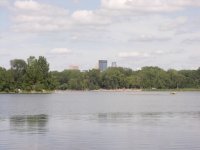
wonder if I should take a pic from my back porch and show you the "desolate, brown, scorched suburban hell" that is LCC. Looks pretty damned green from my backyard.

M
 
Skidog":134hjlbf said:
wonder if I should take a pic from my back porch and show you the "desolate, brown, scorched suburban hell" that is LCC. Looks pretty damned green from my backyard.
I've tried that before - it doesn't appear to work. rfarren and Sharon don't believe the pictures for some reason and then Patrick starts complaining about land use and sprawl. Some people believe what they want, no matter what reality indicates.
 
Marc_C":1xldxlhh said:
Skidog":1xldxlhh said:
wonder if I should take a pic from my back porch and show you the "desolate, brown, scorched suburban hell" that is LCC. Looks pretty damned green from my backyard.
I've tried that before - it doesn't appear to work. rfarren and Sharon don't believe the pictures for some reason and then Patrick starts complaining about land use and sprawl. Some people believe what they want, no matter what reality indicates.

I'll play. I'd say some people feel the need to reassure themselves on the fact that they don't live in a "desolate, brown, scorched suburban hell" . I think Marc brought up this point and rfarren was only joking with his comment. Seems to be Utah locals having an argument with themselves :stir: .
 
Oh! I want to play too!

LCC and the High Uinta's are lonely islands of green in the 2nd driest state in the nation - to argue that Utah is anything but predominantly a desert state is ignoring reality. If you view the Wasatch Front facing North instead of South you're not going to see much green (and a whole lot of brown). Even Park City at 7000' is essentially high desert - with local vegetation predominantly sagebrush and scrub until you hit higher, north-facing terrain. Utah has areas of incredible beauty, but it's mainly the rocks that make the scenery, with the living things providing merely contrast. As for strip malls and suburbanization Utah is no worse or better than the vast majority of the U.S. - it's just a fact of living in America. The one thing for certain is that Utah tends to breed a level of parochial sensitivity that is beyond most places I've seen (I think it would make an interesting psychological study to ascertain why this is).
 
rsmith":15jmx3ow said:
The one thing for certain is that Utah tends to breed a level of parochial sensitivity that is beyond most places I've seen.
rsmith jumps into the scrum head-first.
:popcorn:
 
rsmith":1747vvn6 said:
LCC and the High Uinta's are lonely islands of green..,
Um, no - you're wrong. It seems you don't realize how much of Utah is at high elevation and covered in forests nor how much is cultivated farmland.
rsmith":1747vvn6 said:
...in the 2nd driest state in the nation
That's true.
rsmith":1747vvn6 said:
...to argue that Utah is anything but predominantly a desert state is ignoring reality.
No. If you base the definition of desert entirely on annual precipitation, you'd call it a desert, but that's a significantly outdated and incorrect view of the ecosystem. The plant biologists and ecologists don't do that and take a lot more into account - it's considered high arid plains. Only the West Desert is indeed a desert. You might want to take a look at the acreage of the Wasatch-Cache, Dixie, Ashley, Fish Lake, Manti-LaSal, and Uintah National Forests for some grounding in reality. It seems you don't realize how much of Utah is at high elevation and covered in forests nor how much is cultivated farmland.

rsmith":1747vvn6 said:
If you view the Wasatch Front facing North instead of South you're not going to see much green (and a whole lot of brown).
What does that even mean? On one side there's this huge lake and the other side the remnants of a recent major thrust fault that produced a 4000' elevation delta in a half mile. No, we don't have the rolling vegetation encased hills that are humorously called mountains in the Northeast. But calling it desert is just as incorrect as calling the central valley of CA or the Owens River valley a desert simply because they're brown much of the year.

rsmith":1747vvn6 said:
Even Park City at 7000' is essentially high desert - with local vegetation predominantly sagebrush and scrub until you hit higher, north-facing terrain.
No, incorrect. See comments about deserts above. Also, all the conifers on all aspects in PC might disagree with you.

rsmith":1747vvn6 said:
The one thing for certain is that Utah tends to breed a level of parochial sensitivity that is beyond most places I've seen (I think it would make an interesting psychological study to ascertain why this is).
It's rather simple. On the one hand, the natives here, if they're LSD, fervently believe they're the chosen people as ordained by dog and that Zion (no, not the national park!) is a special place, thus the sensitivity from that quarter.
As for the rest of us, particularly the transplants, we just tire of hearing the same endless misconceptions from visitors borne of ignorance or minimal data from a handful of visits.
 
I really don't mean to disrespect, Marc. I was born in Utah, raised in Utah, graduated from the U, did a little ski instructing at Alta and really miss the proximity and constant 'companionship' of the Wasatch. You develop some kind of kindred relationship with Mount Olympus, Twin Peaks, Lone Peak, etc. when they're always towering above you. But Utah is uniquely polarizing. I know all about the deep provincial feelings of the local populace. For the dominant religion the sense of belonging, ownership and pride is understandable (but can get to be a bit overbearing if you're not a believer). But for the transplants I would say who cares what anyone thinks of Utah? You choose to live there for your own reasons (and the beauty, skiing and access to outdoors recreation are pretty solid reasons). I still feel compelled to call out things I feel stretch the truth about the state (mostly out of fun but also since I find myself being defensive occasionally when it comes to Utah and I would rather not be since, again, it's only my opinion that matters in the end). I mean, let's call a spade a spade. Flying over Utah makes it obvious how desolate the place really is - the entire west and southern portions of the state are akin to the surface of mars. The eastern part of the state is sagebrush country. The Wasatch is a rather small mountain range and again an island of green in a sea of desert or scrub. The High Uintas, Wasatch and Boulder plateaus are green, but you've got to get to around 8,000' before you're in the thick aspens/pines. None of this detracts from the beauty of Utah - it rather makes the beauty of Utah unique. It doesn't have the vibrant greenery of the Northwest or East nor the palm trees and year-round blooms of California. But, man, there is nothing that compares to the Virgin Narrows, houseboating on Powell, exploring the arches and canyons in Southern Utah, hiking up an 11,000 feet peak and spotting your house 6'000 feet below you, skiing waist-deep through some secret spot in Catherine's... When my Dad calls me and tells me it snowed 8 inches at his house in Salt Lake and that he could literally blow the snow off his car with nothing more than a strong breath I just want to break down and cry. But, I'm sorry, Utah is still pretty brown...
 
rsmith":1sbwmpre said:
But Utah is uniquely polarizing. I know all about the deep provincial feelings of the local populace. For the dominant religion the sense of belonging, ownership and pride is understandable (but can get to be a bit overbearing if you're not a believer). But for the transplants I would say who cares what anyone thinks of Utah?
Actually, I just rather dislike misinformation resulting from ignorance, which somehow seems rather prevalent these days in discussion fora. For me it's not really Utah specific. I bugs me just as much when someone flatly states that "...skiing at Stowe sucks because it rains there...", based on their single trip there when it did happen to rain. Or the Utards who insist that there's never any powder in New England and can't understand why anyone would ski there. Or climbers who promote the myth that there are numerous multi-pitch sport routes in Red Rocks because they did Prince of Darkness which does happen to have a lot of bolts on it (but is by no means a sport route)(apologies if you or others are non-climbers and this last sentence reads as gibberish). For what ever reason, there seem to be more myths and misconceptions about Utah than a lot of other western places.

rsmith":1sbwmpre said:
But, I'm sorry, Utah is still pretty brown...
Compared to some other areas, sure. But I now find those other areas overbearing and downright oppressive in the unrelenting green. And for it to be that green, the humidity has to be equally oppressive. But how brown is brown is fairly subjective. I find the red rock country down in Dixie incredibly green, but not the obnoxious hit-you-in-the-face green of, say, upstate NY or CT. It's far more subtle and you have to be more observant and more in touch with the landscape.

And quoting out of sequence:
rsmith":1sbwmpre said:
I was born in Utah, raised in Utah, graduated from the U, did a little ski instructing at Alta and really miss the proximity and constant 'companionship' of the Wasatch. You develop some kind of kindred relationship with Mount Olympus, Twin Peaks, Lone Peak, etc. when they're always towering above you....You choose to live there for your own reasons (and the beauty, skiing and access to outdoors recreation are pretty solid reasons). ...The High Uintas, Wasatch and Boulder plateaus are green, but you've got to get to around 8,000' before you're in the thick aspens/pines. None of this detracts from the beauty of Utah - it rather makes the beauty of Utah unique. It doesn't have the vibrant greenery of the Northwest or East nor the palm trees and year-round blooms of California. But, man, there is nothing that compares to the Virgin Narrows, houseboating on Powell, exploring the arches and canyons in Southern Utah, hiking up an 11,000 feet peak and spotting your house 6'000 feet below you, skiing waist-deep through some secret spot in Catherine's... When my Dad calls me and tells me it snowed 8 inches at his house in Salt Lake and that he could literally blow the snow off his car with nothing more than a strong breath I just want to break down and cry.
Which sums things up more eloquently than I've been able to do.
 
I for one never said Utah was particularly brown. In fact, I think I once posted on how I was shocked at how green SLC was when I saw pictures of it during the summer...

I only said that it was strip mall hell, with an innefficient sprawled layout. :troll: :wink: I encourage you to ignore the last comment as if the emoticons didn't let you know, I'm just ragging on ya... So, please don't get your panties in a knot.


Marc_C":1gpqpe35 said:
obnoxious hit-you-in-the-face green of, say, upstate NY or CT.

Amazing :-P :-P :-P I agree we should start cutting down these obnoxious trees in this neck of the woods. :wink:
Marc_C":1gpqpe35 said:
No, we don't have the rolling vegetation encased hills that are humorously called mountains in the Northeast.
:troll:
Many of those "hills" are 3,000 feet above the valley floor.
Marc_C":1gpqpe35 said:
If you base the definition of desert entirely on annual precipitation, you'd call it a desert, but that's a significantly outdated and incorrect view of the ecosystem. The plant biologists and ecologists don't do that and take a lot more into account - it's considered high arid plains. Only the West Desert is indeed a desert.

I didn't realize that bioligists use a different standard for what they call desert. That's a pretty neat fact. I hope it's supported, because I don't want to get smoked when I use that the next time I get into an argument over what is and isn't a desert. I know, for example, that a lot of the north-western great plains are actually considered desert, but perhaps now it isn't.
 
I see a potential career move for Marc C. Isn't there some sort of state position available as a full-time Utah brand advocate? Righter of wrongs, corrector of misperceptions, guardian of the state's besieged honor! Even prepared to rebuke someone who grew up and went to college there!

Or at the very least, Admin should make him an official FTO employee. There must be some money left in the FY 09 budget...
 
As with most matters of opinion, it is all relative, of course. I have not looked at tourism data for SLC and the state, but I think it has to be a safe bet that most visitors to the region are arriving from greener locales. The city I live in, and the landscapes I recreate in (see attached pics), are considerably greener and endowed with many more lakes, rivers and streams (when not frozen and covered in snow) than what I see when I visit SLC to ski, or in Admin's pics of the Uintas (as beautiful as they are), or in other summer-time pics of the region posted here, or out the plane window when flying in and out of SLC. I therefore tend to think about, and probably talk about, Utah as, well, kinda dry. Even acknowledging Utah's significant pockets and "islands" of green, I don't think this is an unfair general characterization of the landscape. I also think that any transplant from the NE must understand this.

:hijack:
 

Attachments

  • MN1.JPG
    MN1.JPG
    50.5 KB · Views: 1,728
  • MN2.JPG
    MN2.JPG
    38.8 KB · Views: 1,781
  • MN3.JPG
    MN3.JPG
    57.7 KB · Views: 1,735
  • MN4.JPG
    MN4.JPG
    118.5 KB · Views: 1,736
  • MN5.JPG
    MN5.JPG
    115 KB · Views: 1,747
  • IMG_3865.JPG
    IMG_3865.JPG
    161.8 KB · Views: 1,731
Let's be fair here. Is Utah drier than the midwest, east coast, and west coast? Well.... duh. Is it green? Well, that's relative. I've seen photos of SLC and Deer Valley in July, and it is pretty green. Is it forested heavily? No, but is it green. Remember that town of midway? It may not have been "charming" but it was green. I couldn't argue that.

To me this argument is like saying, the east coast has more ice in the winter than Utah. Duh, but I like it just fine. Can we all agree on one thing:
obnoxious hit-you-in-the-face green of, say, upstate NY or CT
is the greatest quote ever on FTO. Obnoxious hit-you-in-the-face green! Sounds like a great jam/death metal hybrid band.
 
But I now find those other areas overbearing and downright oppressive in the unrelenting green. And for it to be that green, the humidity has to be equally oppressive.
The first sentence is a bit bizarre. Most people would find lush landscape more pleasant to look at than brown landscape. But of course the second sentence is usually true. So to me, do you want to look at the scenery or be outside in it? If the latter, it's lot more pleasant out here.

My recent trip to Japan puts an interesting spin on this debate. Japan has a climate very similar to the East Coast at similar latitude. Even more rain, so it's very lush and green. But it also has "real mountains." Japan Alps peak out at 10,600 and Mt. Fuji is 12,385. The weather is clearly more likely to be an impediment to enjoying those mountains than in the American West, at least in the summer.

I didn't realize that biologists use a different standard for what they call desert. That's a pretty neat fact. I hope it's supported, because I don't want to get smoked when I use that the next time I get into an argument over what is and isn't a desert. I know, for example, that a lot of the north-western great plains are actually considered desert, but perhaps now it isn't.
Since you asked :wink:, there is the formal Koppen Climate Classification system (details here: http://en.wikipedia.org/wiki/K%C3%B6ppe ... sification) For details of U.S. States: http://snow.cals.uidaho.edu/Clim_Map/koppen_usa_map.htm

FYI the map has clearly messed up coastal SoCal, which can't possibly be BSk (should be mostly Csa with some BSh drier locations). The Utah map is more accurate. The slight majority of Utah that the easterners consider desert is classified as steppe (which Americans usually call semidesert). The desert/steppe formulas are in the wikipedia article. The rest of the state is the D climate group, which means that the warmest month averages over 50F and the coldest below freezing, and there is enough precipitation relative to temperature to fail the desert/steppe formulas.

The Koppen scheme was originally designed in the late 19th century and has some flaws, as described in the wikipedia article. Since one of those flaws is poorer modeling when temperature variations are due to altitude rather than latitude, it's not too hard to find inconsistencies in the American West vs. some other places that end up in the same classifications by formula.
 
Back
Top