
ChrisC
Well-known member
It appears almost every Western USA mountain needs a wildfire contingency plan. Probably most have one by now (and Analysts should be asked by Vail and Alterra.
These fires often irreversibly change the character of the impacted ski mountains and cause widespread damage that is not remedied within 12 months.
For example, Sierra-at-Tahoe was irrevocably changed by the Caldor Fire. I have revisited it, but the old-growth trees that made it unique are gone forever. For a day trip, I will always choose Sugar Bowl over Sierra-at-Tahoe - and now by a now-more-lopsided margin.
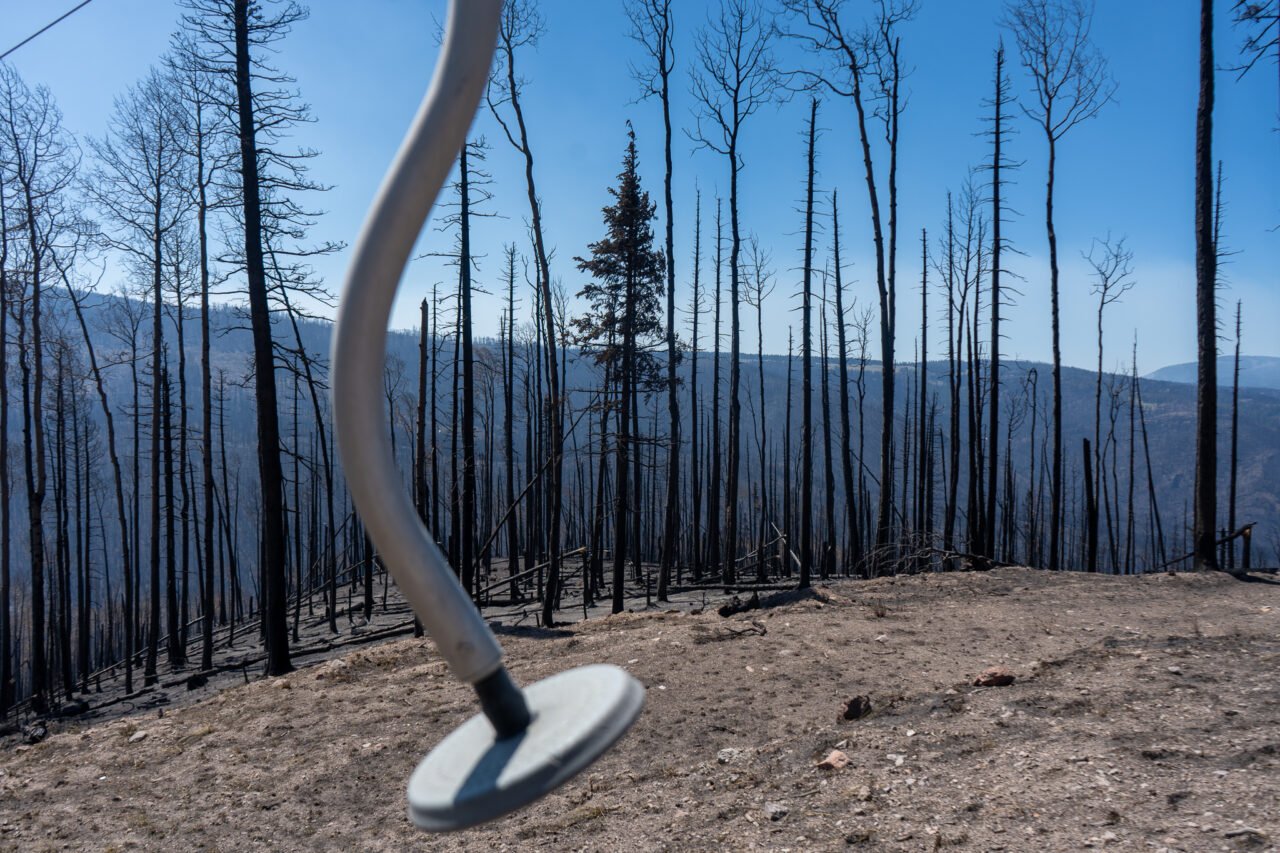
I am afraid Eagle Point Ski Area, UT, might no longer be viable after the Cottonwood Fire; it was always far off the beaten path for a Utah ski area, and relatively modest in layout, and it appears the fire took out some of its core operations and terrain.
 www.eaglepointresort.com
 www.eaglepointresort.com
Given the quality and competition of skiing in Utah, I am not sure if this is a viable offering located almost 3.5 hours from SLC/Las Vegas - plus Brian Head nearby - even when cleaned up/restored. (I have driven from Las Vegas to SLC after a work conference. For me, Brian Head was a worthwhile stop. Eagle Point fell into the category of "Another Average 1000-1500 Vertical Drop Western USA Mountain with Average Terrain or Snowfall". Not worth a special stop)
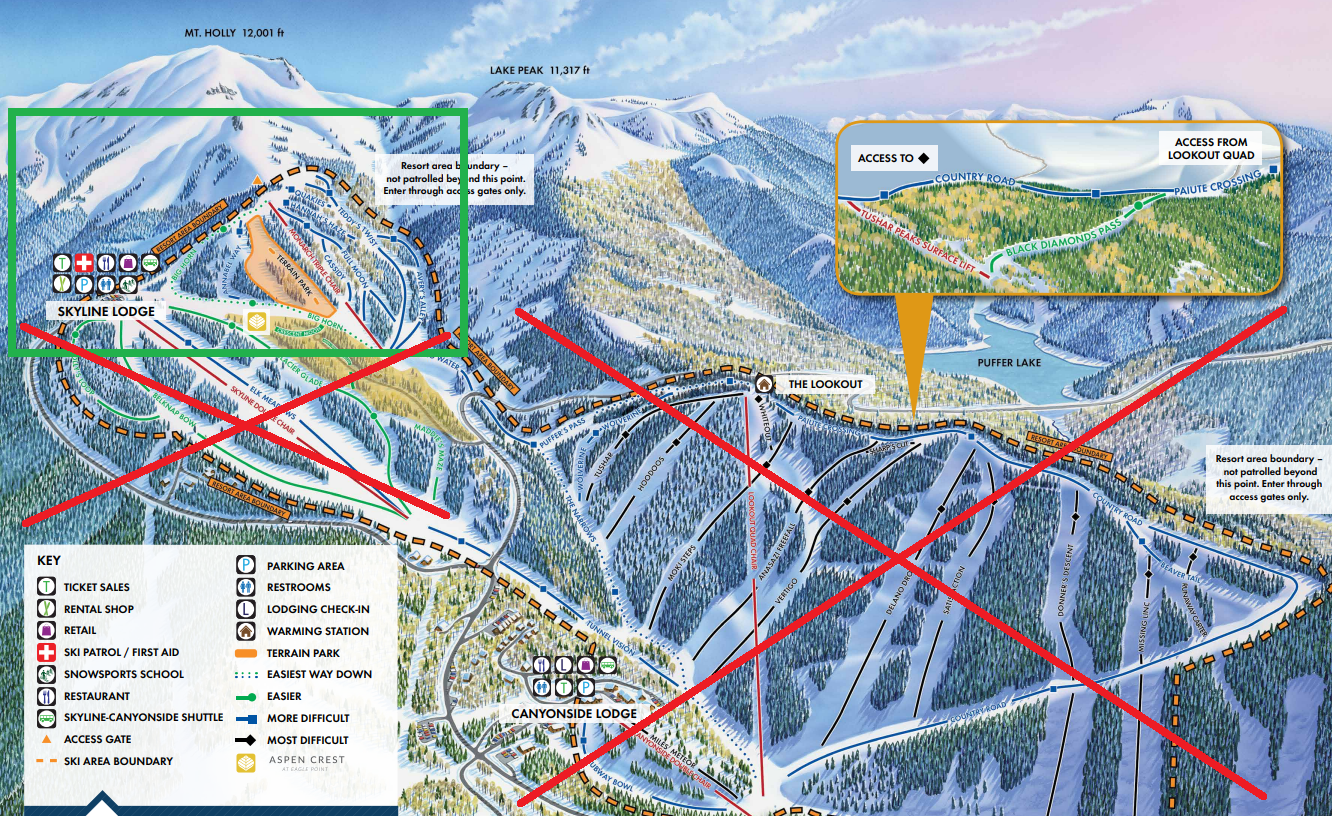
GREEN = Survived / OK
RED = Damaged
I was aware of some recent fires affecting ski areas, including Sierra, Pajarito, and Mountain High. Sun Valley prevented fire from reaching the resort.
However, the list from 2000 is long:
Severity ranking for ski areas you’d actually recognize as a skier would be:
1. Sierra-at-Tahoe 2021 — biggest terrain transformation
2. Eagle Point 2026 — possibly extraordinary infrastructure/property destruction; still developing
3. Selwyn 2020 — essentially devastated and rebuilt
4. Pajarito 2000/2011 — repeated direct landscape impact
5. Sipapu 2022 — significant direct regional/ski-area impact
These fires often irreversibly change the character of the impacted ski mountains and cause widespread damage that is not remedied within 12 months.
For example, Sierra-at-Tahoe was irrevocably changed by the Caldor Fire. I have revisited it, but the old-growth trees that made it unique are gone forever. For a day trip, I will always choose Sugar Bowl over Sierra-at-Tahoe - and now by a now-more-lopsided margin.
I am afraid Eagle Point Ski Area, UT, might no longer be viable after the Cottonwood Fire; it was always far off the beaten path for a Utah ski area, and relatively modest in layout, and it appears the fire took out some of its core operations and terrain.
Blog - Eagle Point Resort
News and Updates on Eagle Point Resort in Utah. Skiing, Snowboarding, and summer adventures for families in the Tushar Mountains.
www.eaglepointresort.com
Eagle Point Resort Provides Update Following Cottonwood Fire June 29th, 2026 - Eagle Point Resort
Today, for the first time since the Cottonwood Fire reached Eagle Point Resort, we were able to return and begin seeing the impact firsthand. We wanted to share an initial […]
www.eaglepointresort.com
Given the quality and competition of skiing in Utah, I am not sure if this is a viable offering located almost 3.5 hours from SLC/Las Vegas - plus Brian Head nearby - even when cleaned up/restored. (I have driven from Las Vegas to SLC after a work conference. For me, Brian Head was a worthwhile stop. Eagle Point fell into the category of "Another Average 1000-1500 Vertical Drop Western USA Mountain with Average Terrain or Snowfall". Not worth a special stop)
GREEN = Survived / OK
RED = Damaged
I was aware of some recent fires affecting ski areas, including Sierra, Pajarito, and Mountain High. Sun Valley prevented fire from reaching the resort.
However, the list from 2000 is long:
- Sierra-at-Tahoe — California, 2021, Caldor Fire. The modern benchmark for ski-area wildfire devastation: roughly 80% of the skiable acreage was affected, huge tree loss, lift and utility damage, and the resort missed the entire 2021–22 season. For a skier, this is the clearest case where wildfire fundamentally changed the mountain’s terrain character.
- Eagle Point Resort — Utah, 2026, Cottonwood Fire. This is the newest major disaster and, based on early assessments, one of the worst ever: Canyonside Lodge, another warming facility, 30 cabins and 100+ condos destroyed; four of five chairlifts damaged. The full long-term impact is still being assessed as of July 2026.
- Selwyn Snow Resort — Australia, 2020. Catastrophically damaged in the Black Summer bushfires; resort buildings were largely destroyed and the area required a major rebuild. This is probably the strongest Southern Hemisphere example since 2000.
- Sipapu Ski and Summer Resort — New Mexico, 2022. The Hermits Peak/Calf Canyon fire affected the ski area and surrounding forest; an important case in the Southwest, though not on Sierra-at-Tahoe’s scale.
- Pajarito Mountain Ski Area — New Mexico, 2000 and 2011. A particularly notable repeat-exposure mountain: the Cerro Grande Fire in 2000 and Las Conchas Fire in 2011 severely affected the surrounding landscape and ski area. If you count “since 2000” inclusively, this belongs high on the list.
- Arizona Snowbowl — Arizona, 2022. The Pipeline Fire burned immediately around the broader mountain area and had major watershed/forest consequences; less of a direct resort-destruction story than Sierra.
- Mountain High Resort — California, 2024, Bridge Fire. Fire burned through the resort zone and dramatic video made it initially look catastrophic; the ski area survived better than feared, but this was a genuine direct impact, not just distant smoke.
- Mt. Baldy Resort — California, multiple fires. Repeated wildfire exposure in the San Gabriel Mountains, with closures and threats to infrastructure; the 2020s have been especially active.
- Mt. Lemmon Ski Valley — Arizona, 2003 and 2020. The Aspen Fire and later Bighorn Fire transformed surrounding forests and repeatedly threatened the mountain community and ski area.
- China Peak Mountain Resort — California, 2020, Creek Fire. A major threat/impact case: evacuation, severe burning in the surrounding Sierra National Forest, and disruption, though the core resort avoided Sierra-at-Tahoe-level destruction.
- Dodge Ridge Mountain Resort — California, 2013, Rim Fire. The huge Rim Fire heavily affected the surrounding region and threatened the ski area; more “near miss/landscape impact” than direct destruction.
- Hoodoo Ski Area — Oregon, 2020. The Holiday Farm/Lionshead-era fire complex heavily affected surrounding Cascades access and forests; operational impact but not catastrophic resort destruction.
- Mt. Ashland Ski Area — Oregon, multiple seasons. Repeated nearby wildfire, smoke, access and forest impacts; more chronic exposure than one resort-destroying event.
- Mammoth Mountain Ski Area — California, multiple fires. Repeated nearby fires and evacuations/closures, but the core ski infrastructure has largely escaped catastrophic direct loss.
- Heavenly Mountain Resort — Tahoe, 2021. Seriously threatened by the Caldor Fire and evacuation crisis, but importantly not destroyed. I would classify it as a major near miss.
- Kirkwood Mountain Resort — California, 2021. Also threatened by Caldor, with evacuation and fire-defense operations; again, a near miss rather than a Sierra-level direct hit.
- Ski Apache — New Mexico, 2012 and 2024. The Little Bear Fire and later South Fork/Salt fires had enormous regional effects around Ruidoso and the Sacramento Mountains; significant wildfire exposure, access disruption and landscape damage. The 2024 fires forced mass evacuation of Ruidoso.
- Thredbo — Australia, 2003 and 2019–20. Major bushfire threat and regional impact; survived without Selwyn-style destruction.
- Perisher Ski Resort — Australia, 2003 and 2019–20. Repeated severe bushfire exposure in the Snowy Mountains region; mostly threat, access and ecological impact rather than core resort destruction.
- Falls Creek and Mount Hotham — Australia, 2003 and later fires. Both have faced serious Alpine bushfire threats, evacuations and landscape impacts.
Severity ranking for ski areas you’d actually recognize as a skier would be:
1. Sierra-at-Tahoe 2021 — biggest terrain transformation
2. Eagle Point 2026 — possibly extraordinary infrastructure/property destruction; still developing
3. Selwyn 2020 — essentially devastated and rebuilt
4. Pajarito 2000/2011 — repeated direct landscape impact
5. Sipapu 2022 — significant direct regional/ski-area impact
