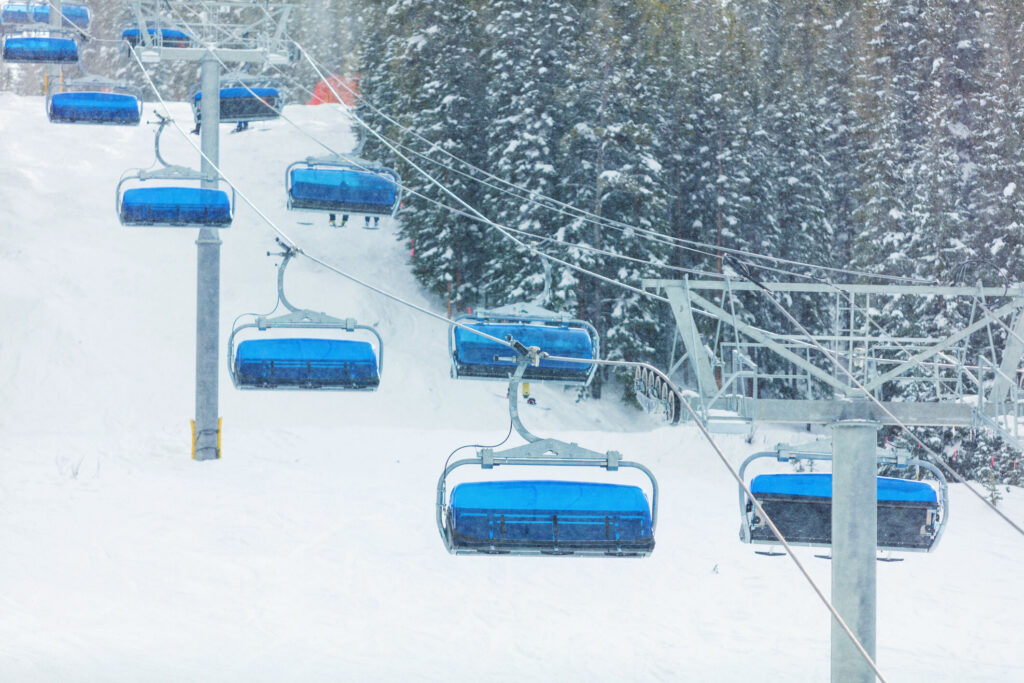
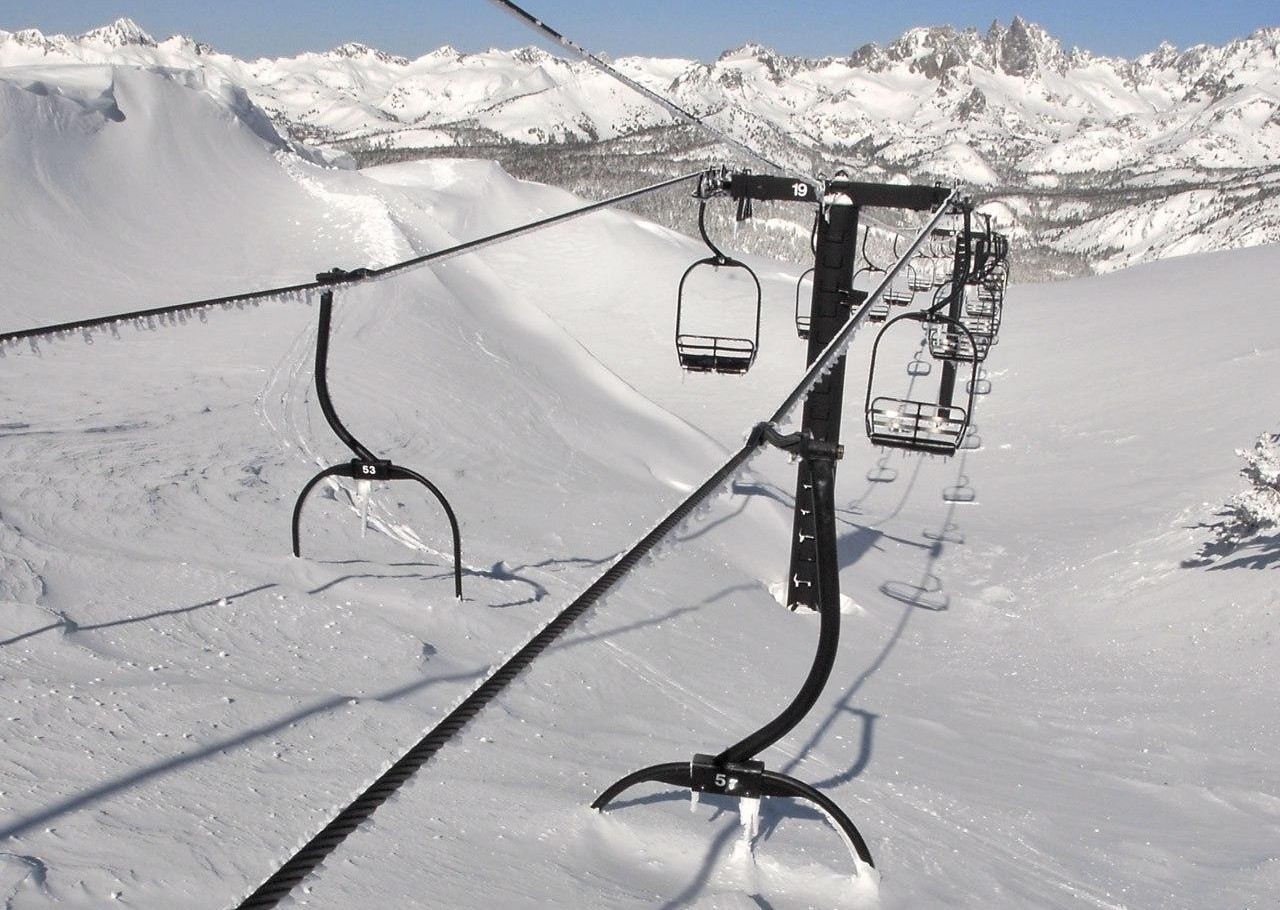
It's hard to have a culture of safety bar use when most lifts do not have them out West.
Especially in the Northwest! I don't think you had a safety bar unless it was a new HS quad; many 1980s & 90s fixed-grip ski lifts lacked bars.
New Data Reveals Nearly 1 in 4 U.S. Chairlifts Lack Restraint Bars
Martin Kuprianowicz | January 22, 2026 |
Industry News
While restraint bars are standard equipment on chairlifts in most ski countries, new data shared this week highlights how unevenly they are adopted across the United States. According to figures published by
Lift Blog on X, roughly 77% of chairlifts used for skiing nationwide are equipped with restraint bars, leaving nearly one in four lifts operating without them. The breakdown by region reveals significant disparities.
In a public X post shared by Lift Blog, the chairlift data resource shared that:
Nationally 77 percent of chairlifts used for skiing have restraint bars.
It varies widely by region:
Pacific Northwest: 80/136 = 59%
Pacific Southwest: 170/235 = 72%
Rocky Mountain: 474/608 = 78%
Midwest: 158/340 = 46%
Northeast: 437/437 = 100%
Southeast: 175/177 = 99%
In most countries the number is 100 percent.
Canada is 99.8%.
The Northeast and Southeast lead the country, with near-universal adoption. Every chairlift in the Northeast—437 out of 437—has a restraint bar, while the Southeast reports 175 of 177 lifts equipped, or 99% coverage, according to the
Lift Blog. Vermont is the only state where
it is the law to lower the restraint bar on a chairlift.
But the picture changes moving west.
In the Rocky Mountains, the country’s largest ski region by terrain and lift count, 474 of 608 lifts—about 78%—have restraint bars, according to data compiled by Lift Blog. The Pacific Southwest follows closely at 72 percent (170 of 235), while the Pacific Northwest lags further behind, with restraint bars on just 59 percent of lifts (80 of 136).
The lowest rate appears in the Midwest, where only 158 of 340 lifts—about 46%—are equipped with restraint bars. Outside the United States, restraint bars are nearly universal.
Lift Blog noted that most countries report 100 percent adoption, while Canada stands at 99.8 percent, making the U.S. an outlier among major ski nations.
Restraint bars are designed to reduce the risk of falls from chairlifts, particularly for children, beginners, and passengers in high winds or icy conditions. Their use has been the subject of debate in the U.S. ski industry for decades, with some resorts citing rider preference, legacy infrastructure, or operational flexibility as reasons for not installing them universally.
The regional split shows both the age of lift fleets and cultural differences across ski markets. Many older fixed-grip chairs in the Midwest and Pacific Northwest were installed decades ago without bars, while resorts in the Northeast and Southeast, with state regulations and insurance standards that are often stricter, have largely modernized their fleets.
Lift Blog did not indicate whether the data includes only primary ski chairs or all passenger lifts, nor whether installations are required by state law or operator policy in each region.
As lift safety continues to draw attention across the industry, the figures offer a snapshot of how differently American resorts approach one of skiing’s most basic safety features—and how far the U.S. remains from the near-universal standards seen abroad.
While restraint bars are standard on chairlifts in most countries, new data highlights how unevenly they are adopted in the US.

snowbrains.com